
Hazardous — combustible dust
Combustible dust safety
for food powders.
Milk powder, flour, sugar, starch — ordinary food ingredients that, dispersed as a cloud, burn fast enough to destroy plant. The controls are engineering, not caution.
In brief
A combustible dust is any fine solid that can burn or explode when dispersed in air — most food powders qualify. An explosion needs five elements (fuel, oxygen, ignition, dispersion, confinement); powder handling systems are engineered to remove at least one, through containment, ignition control, and explosion venting, suppression or isolation.
In detail
What it means for a powder plant.
The dust explosion pentagon extends the fire triangle: fuel, oxidant and ignition plus dispersion (a cloud) and confinement (a vessel or building). Every transfer point in a powder plant creates the first four routinely — which is why the discipline is systematic: minimise escaped dust, control ignition sources, and protect the vessels where clouds are unavoidable.
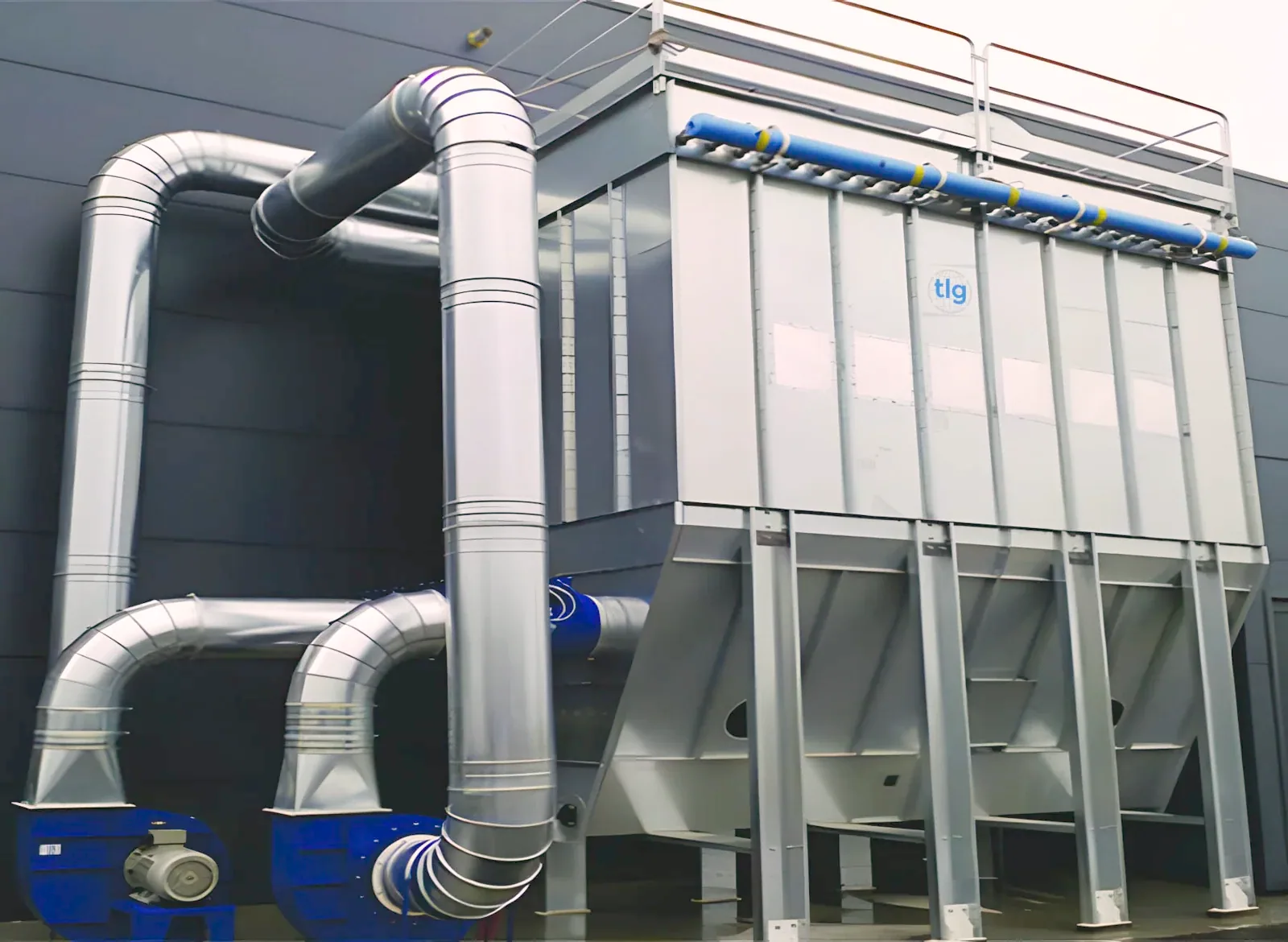
Primary controls live in the equipment: earthed and bonded lines against static, rated rotary valves as explosion isolation, vented or suppressed filter units and silos. Secondary controls live in housekeeping — a 1 mm dust layer over a floor can fuel a devastating secondary explosion, which is why extraction at source matters as much as protection at the vessel.
- Common fuels
- Milk powder · flour · sugar · starch · protein powders
- The pentagon
- Fuel + oxygen + ignition + dispersion + confinement
- Key metrics
- Kst (severity), MIE (ignition energy), MEC (concentration)
- Controls
- Containment · ignition control · venting / suppression / isolation
Common questions
Frequently asked questions.
- What makes a dust combustible?
- Fine particle size and an oxidisable material. Below roughly 500 microns, the surface area of an organic powder is high enough that a dispersed cloud can propagate flame. Almost every food powder — dairy, flour, sugar, starch — is combustible at the fineness food processing uses.
- What is a Kst value?
- A measure of dust explosion severity — the maximum rate of pressure rise in a standardised 1 m³ test, in bar·m/s. St 1 dusts (Kst up to 200) include most food powders; higher classes explode more violently. Kst sizes the explosion vents and suppression a vessel needs.
- How are dust explosions prevented in powder plants?
- By breaking the pentagon: contained transfer so clouds only exist inside equipment, extraction so layers never accumulate, earthing and rated equipment so ignition sources are controlled, and engineered protection — vents, suppression, isolation valves — on the vessels where clouds are unavoidable.
Discuss your project.
Talk to an engineer.
Send the material, throughput and plant constraints. You’ll get a considered answer from an engineer, not a brochure.