
Solutions — controls & integration
Process automation
and plant controls.
Sequencing, interlocks, recipes and records — designed alongside the ironwork, because control logic is process knowledge in code.
In brief
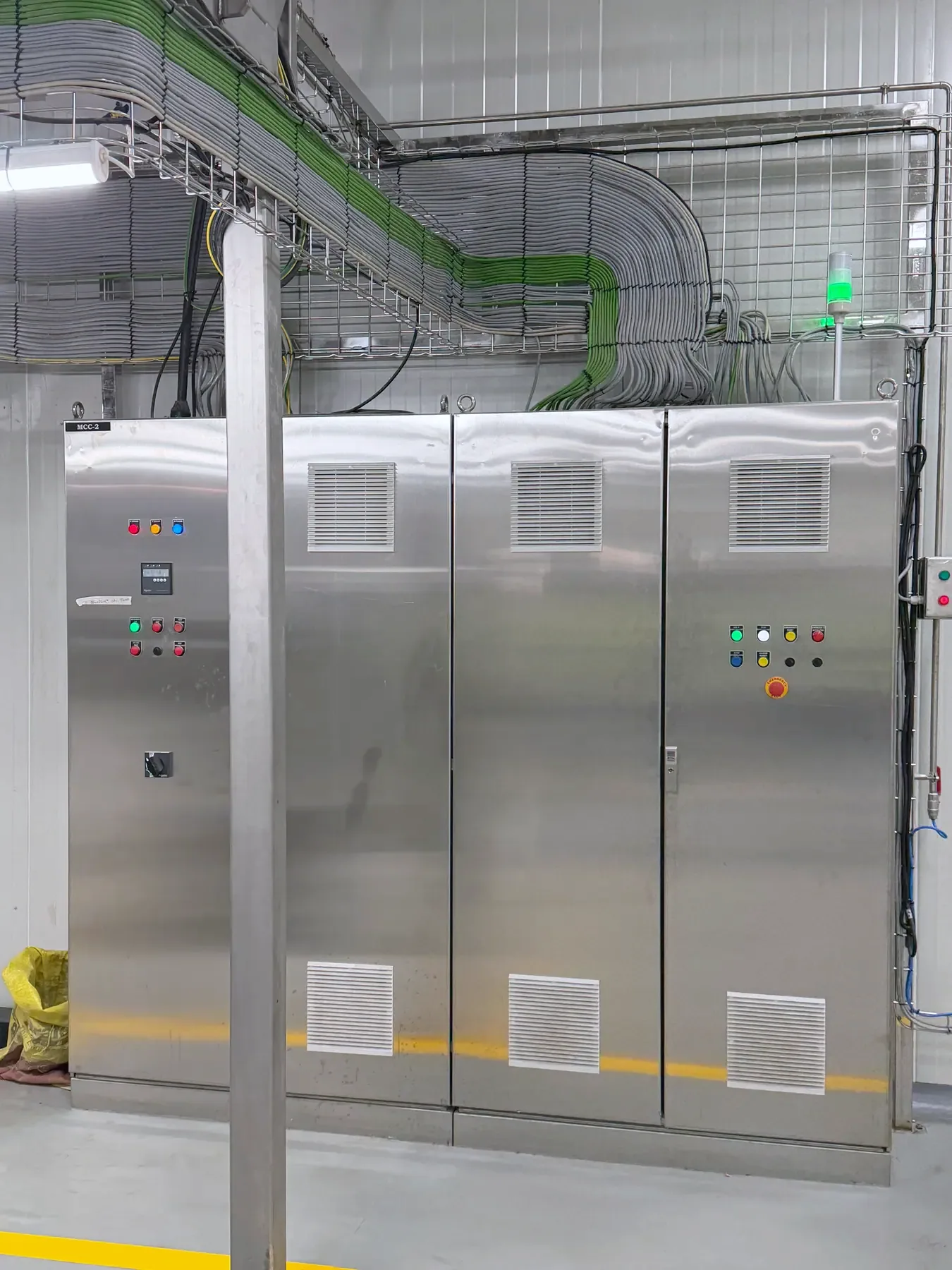
TLG designs the controls with the mechanical system: PLC sequencing of conveying cycles, recipe-driven batching, interlocks that protect people and product, and batch records for audit. One team engineering both halves means the automation reflects how the line actually behaves — surge, settling, cleaning states included.
In detail
How it works.
A conveying sequence is judgement encoded: purge times, valve orders, what happens on a blocked-line alarm at 2 a.m. When the control engineer and the mechanical engineer are the same firm, that judgement survives from design into logic — and commissioning stops being a negotiation between suppliers.
- Controls
- PLC/HMI, VSD integration, plant interlocks
- Batching
- Recipe management, dosing sequences, batch records
- Integration
- Single-team mechanical + controls engineering
- Support
- Commissioning, training, remote assistance
Automation systems
Factory automation, end to end.
TLG's factory automation improves quality, efficiency, safety, sustainability and security in one integration: consistent product quality through precise control and monitoring that minimises human error, streamlined workflows that reduce downtime, and interlocks that keep people away from moving powder.
Every TLG line ships with its automation designed by the same team that engineered the ironwork — PLC sequencing, recipe-driven batching, and the plant records that satisfy an audit.
- Quality
- Precise control and monitoring — defects engineered out
- Efficiency
- Streamlined workflows, optimised resource use
- Safety
- Interlocks and guarding logic designed with the plant
- Records
- Batch documentation generated automatically
Customer support
System Care — support that prevents the emergency.
Maintenance extends equipment life, reduces downtime and lowers overall cost — and it is overlooked in many operations until it becomes an emergency. TLG's automation team offers a System Care contract to counter exactly that: scheduled checks of the plant control system and the health of field instruments — level sensors, limit switches, pressure transmitters, load cell indicators and safety devices — before they fail.
The contract includes basic training for plant operators and electricians, three automation-expert visits per year, twenty hours of online support whenever required, and remote access for support and maintenance work. TLG strongly recommends it to every customer running a TLG line.
- Checks
- Plant control system · field instrument health
- Visits
- 3 automation expert visits per year
- Support
- 20 hours online support · remote access
- Training
- Basic training for operators and electricians
Related
Related pages.
Discuss your project.
Talk to an engineer.
Send the material, throughput and plant constraints. You’ll get a considered answer from an engineer, not a brochure.