
Solutions — storage
Powder storage
silos, hoppers and bins.
Any tank holds powder. The engineering is in getting it out — cone angles, discharge aids and moisture control matched to how the material behaves.
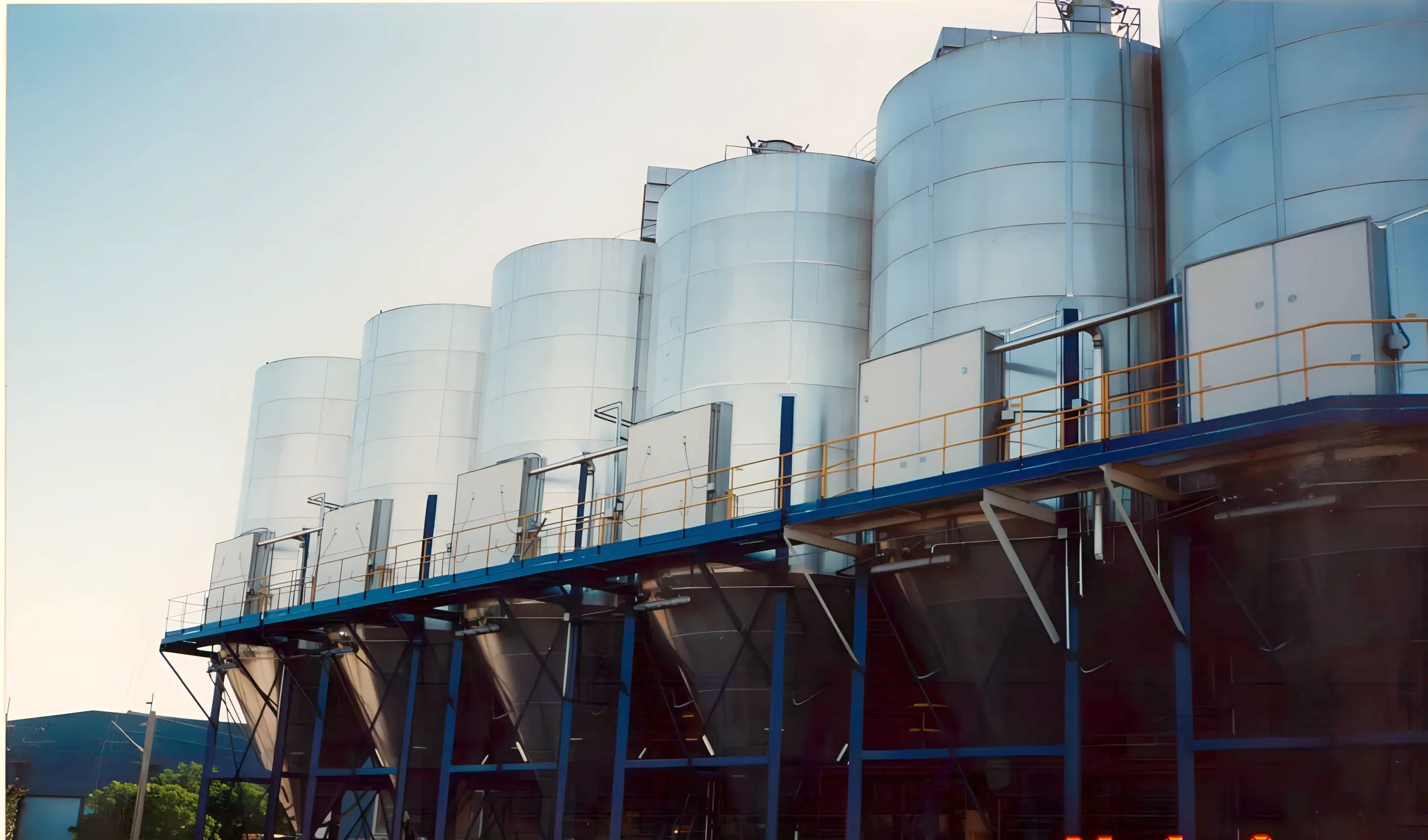
In brief
TLG designs and fabricates powder storage — silos, bins, IBCs, receival and weigh hoppers — with discharge engineered to the powder's flow behaviour. Cone geometry, wall finish, aeration or vibration assist, and moisture and temperature control are selected from the material's properties, not a standard drawing.
In detail
How it works.
Powders bridge, rat-hole and pack. A silo that empties reliably is a flow calculation first and a vessel second: hopper angle against wall friction, outlet size against arching strength, and discharge aids only where the material genuinely needs them.
TLG builds storage as part of the line — silo discharge designed against the conveyor beneath it, weigh hoppers against the batching accuracy the recipe demands.
- Vessels
- Silos, bins, IBCs, receival & weigh hoppers
- Discharge
- Mass-flow cones, aeration, vibration, bin activators
- Environment
- Moisture and temperature control where required
- Materials
- Food-grade stainless; ATEX-zoned builds available
The range
Explore the equipment.
Each system below is engineered to the material and the duty — follow through for the detail.
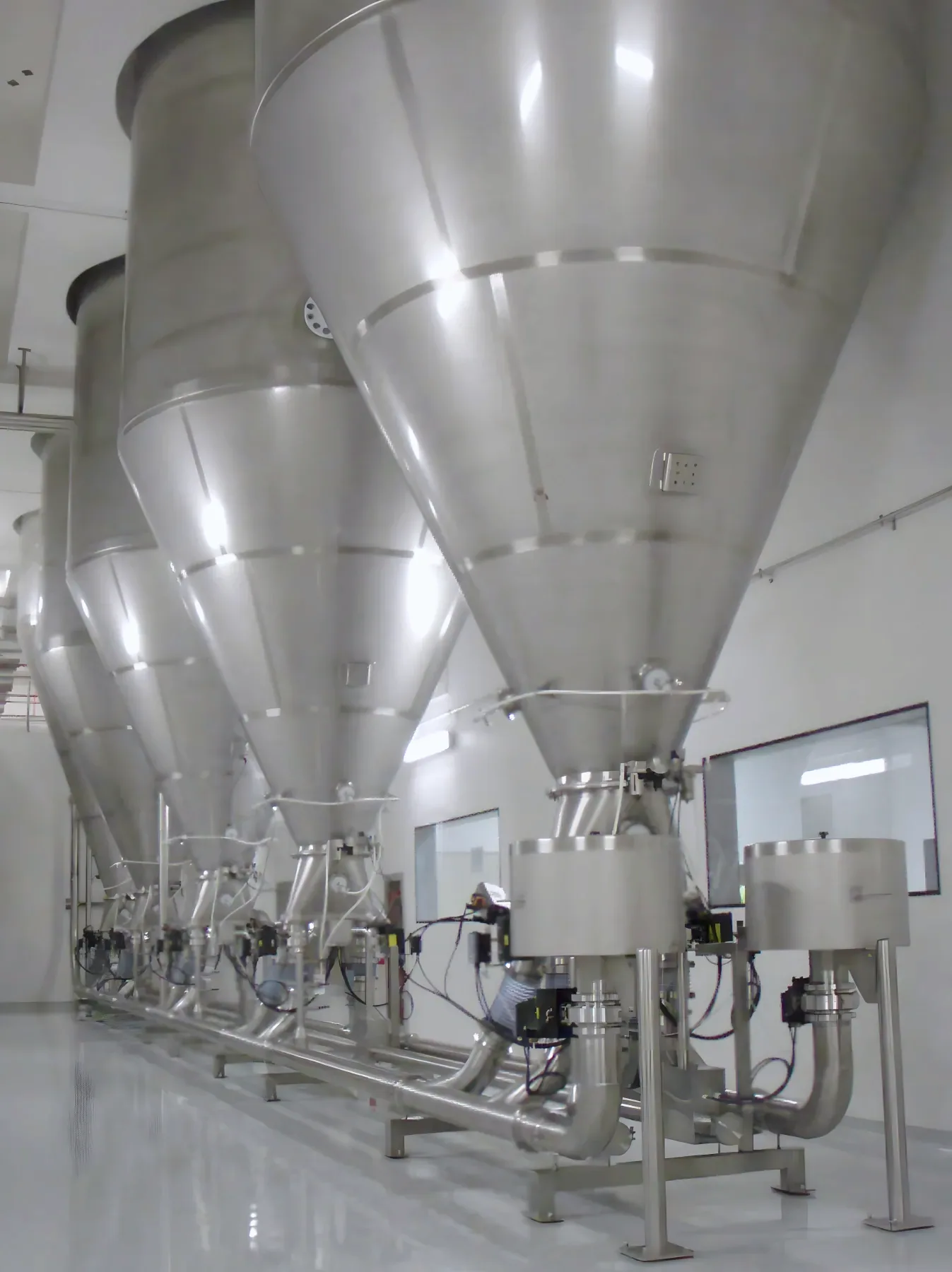
Powder Silos NZ
Bulk storage that feeds the line reliably — mass-flow cones, level instrumentation and top-mounted filtration, fabricated in stainless.
View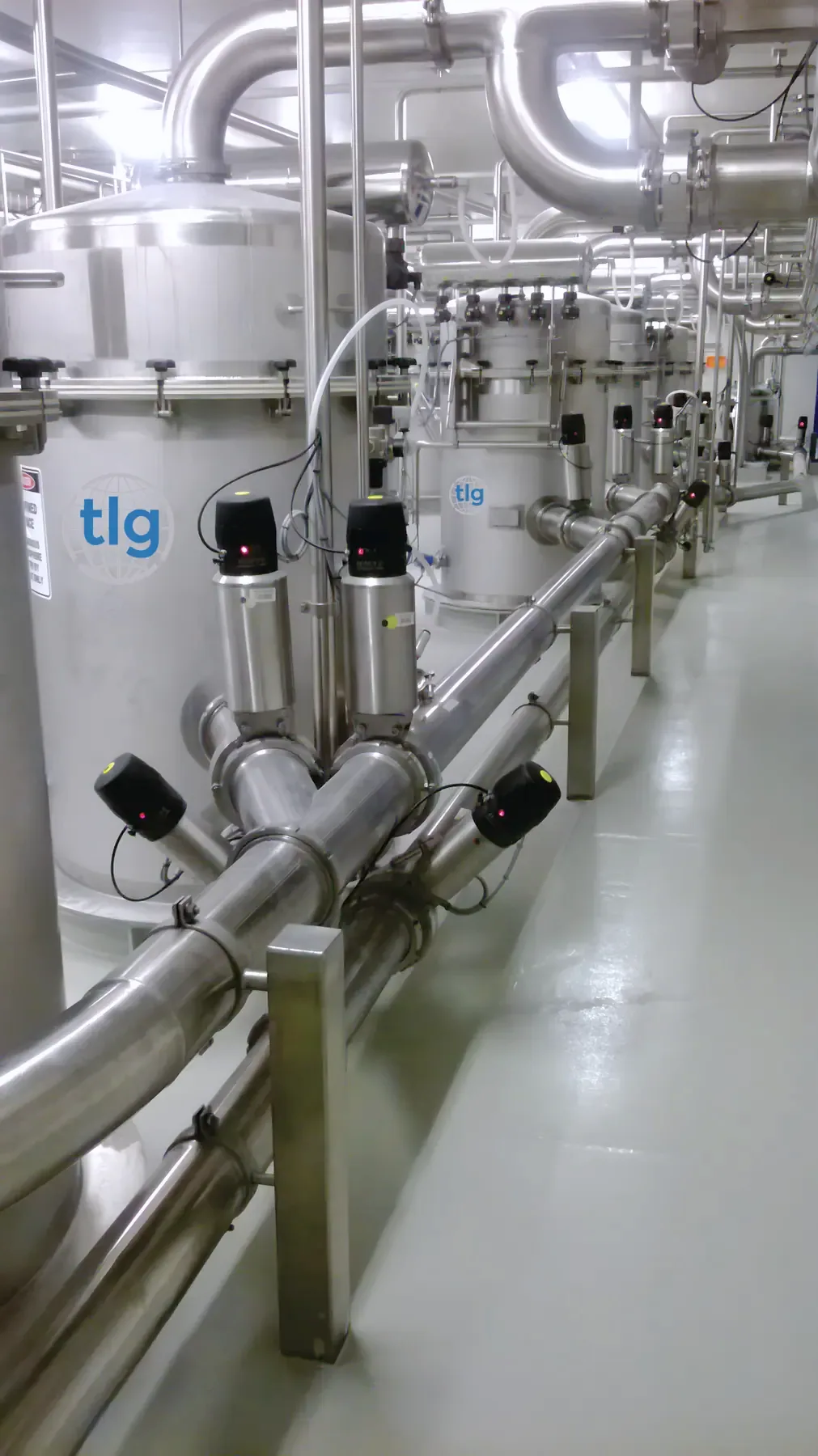
Receival Hoppers
Intake sets the tone for the whole line: contained tipping, controlled extraction, and dust captured at the source.
View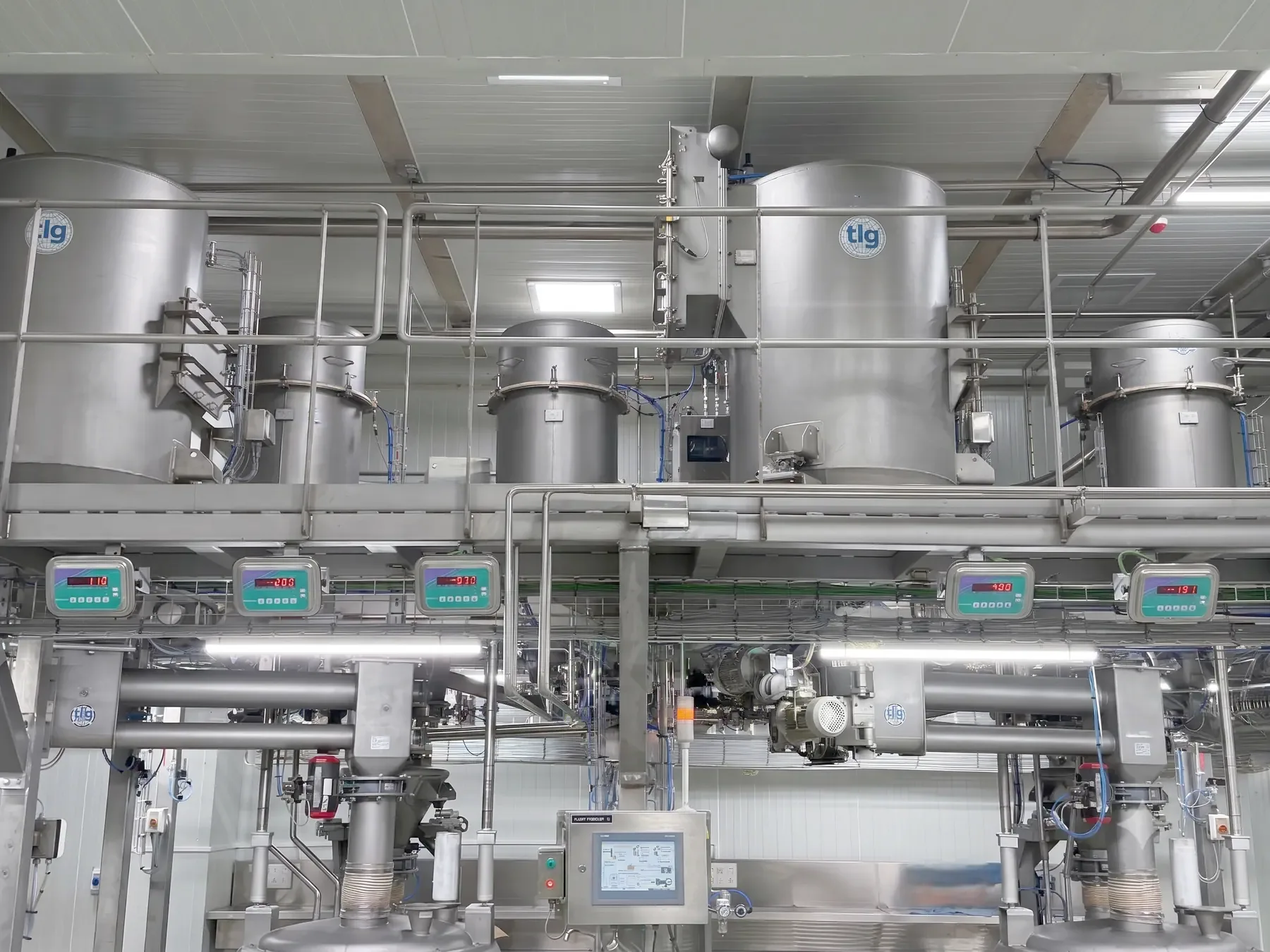
Weigh Hoppers & Batch Weighing
The recipe is only as good as the weighing — load cells isolated from the plant that shakes around them.
View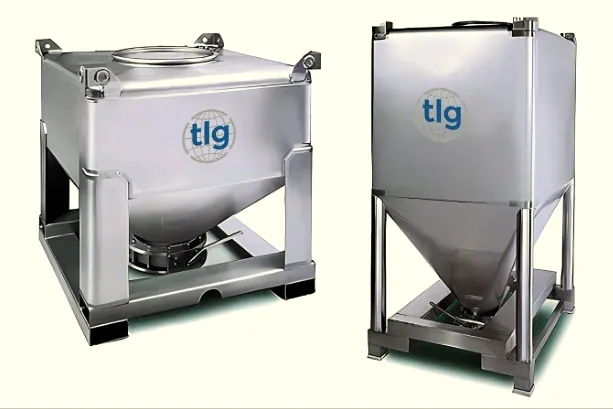
Storage Bins & IBCs
Between processes, powder lives in bins — TLG's own stainless IBCs move product through the plant sealed, stackable and clean.
ViewCommon questions
Frequently asked questions.
- What are the three types of silos?
- By construction: tower silos (vertical cylinders, the standard for powders), bunker silos (horizontal, largely agricultural) and bag silos. In powder processing the meaningful distinctions are material — stainless for food duty — and discharge geometry, engineered to how the specific powder flows.
Related
Related pages.
Discuss your project.
Talk to an engineer.
Send the material, throughput and plant constraints. You’ll get a considered answer from an engineer, not a brochure.