
Solutions — conveying
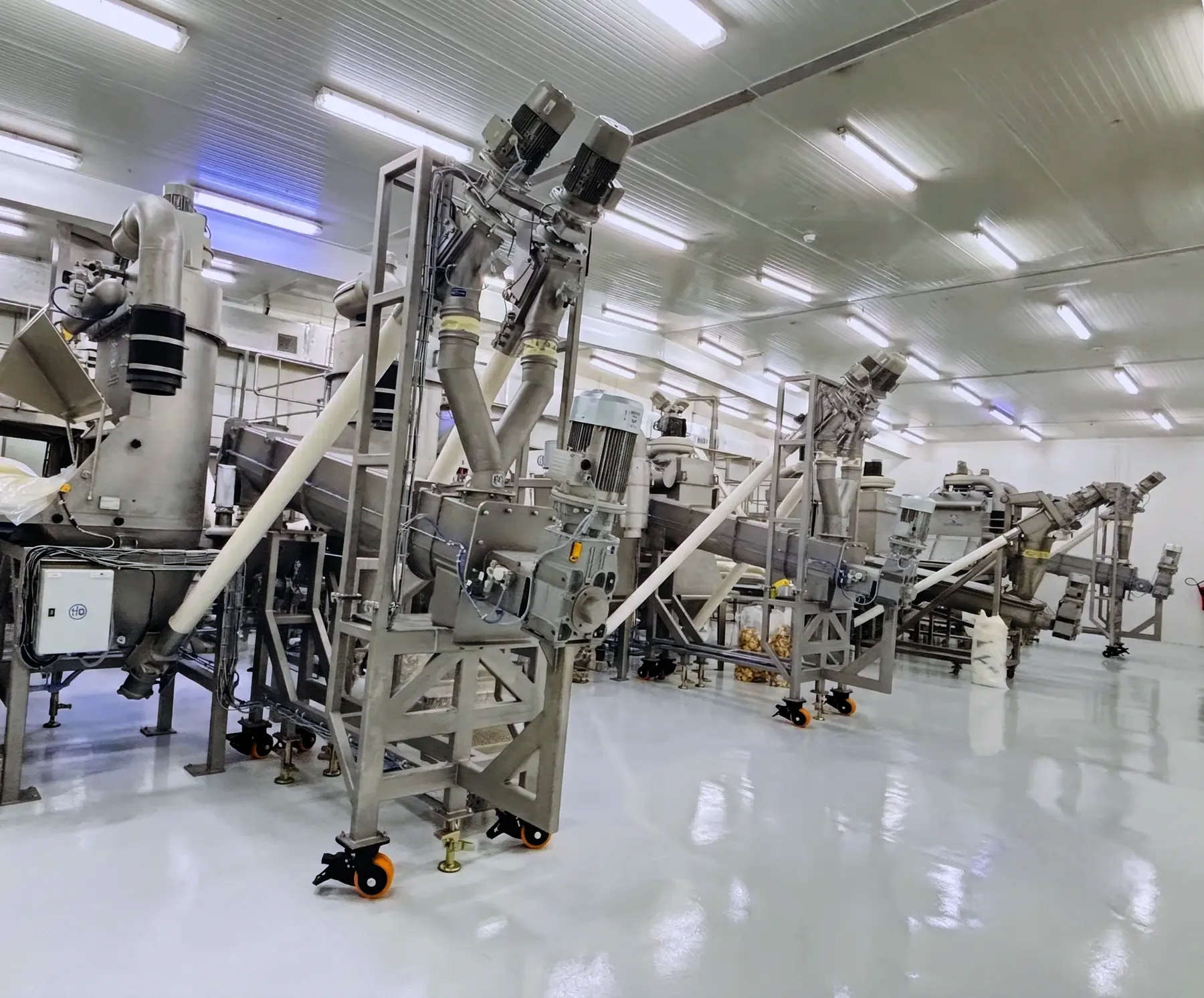
Powder conveying
systems: pneumatic, mechanical, vacuum.
Pneumatic, mechanical and vacuum transfer, selected for the powder's abrasiveness, friability, distance and rate — then engineered as one line with the storage and packaging around it.
In brief
TLG designs and builds powder conveying systems across three families: pneumatic (dense and dilute phase), mechanical (rigid and flexible screw, vibratory) and vacuum transfer. Selection depends on the powder's abrasiveness and friability, the route, and the required rate — and because TLG engineers the whole line, the conveying is designed with the storage and packaging it connects.
In detail
How it works.
No single conveying method suits every powder. Dilute phase is simple and fast but abrades pipework and can shatter friable granules; dense phase protects fragile product with a more capable system; screws give precise, contained transfer over short runs; vacuum keeps hazardous and hygiene-critical powders fully contained. The right answer is a property of the material — which is why every TLG conveying project starts with the powder, not the catalogue.
Because storage, conveying and packaging are engineered together, the interfaces that usually cause trouble — silo discharge into a convey line, line termination above a filling head — are designed once, by one team, and commissioned as a whole.
- Pneumatic
- Dense phase and dilute (lean) phase, pressure and vacuum
- Mechanical
- Rigid screw, flexible screw, vibratory tube feeders
- Components
- Rotary valves, diverter valves, convey pipework and bends
- Hygiene
- Food-grade stainless construction; CIP-able designs available
- Hazardous duty
- ATEX / IECEx compliant designs for combustible powders
The range
Explore the equipment.
Each system below is engineered to the material and the duty — follow through for the detail.
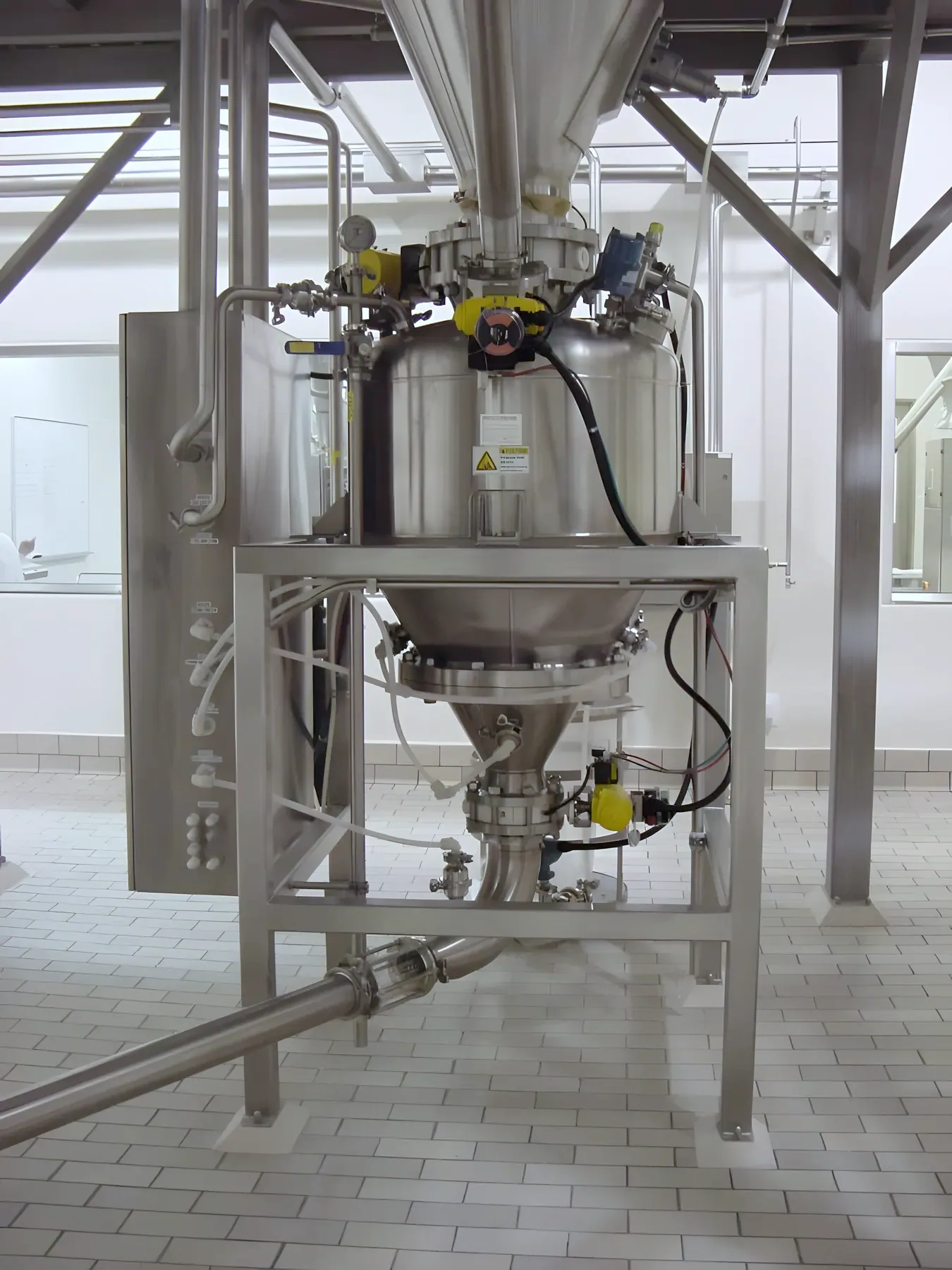
Pneumatic Conveying Systems
Powder moved through an enclosed pipeline on air — the route bends where the plant needs it to, and the product never sees the room.
View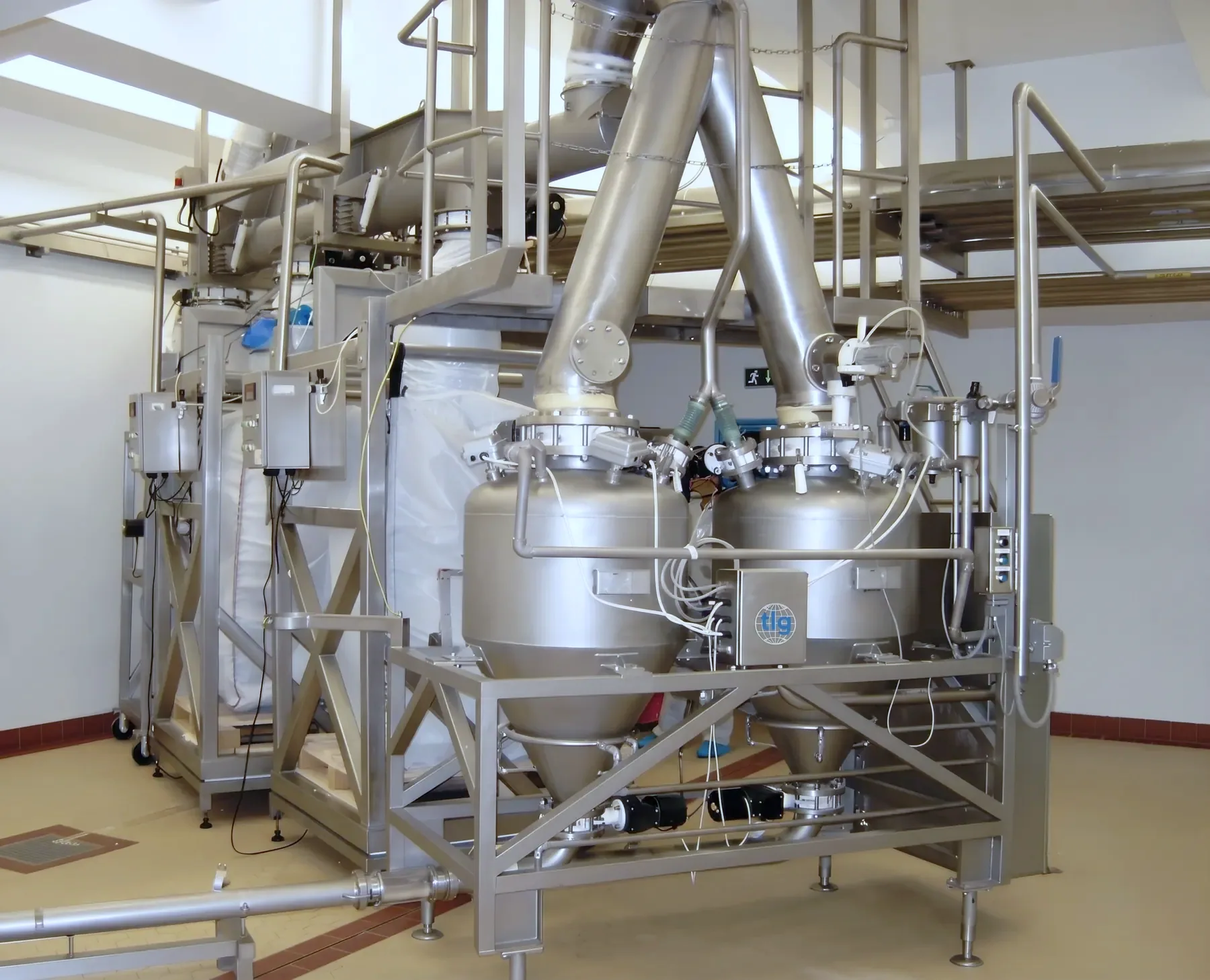
Dense Phase Pneumatic Conveying
Low velocity, high pressure — the powder moves as slugs, not a sandblast. The method of choice for friable dairy products and abrasive duties.
View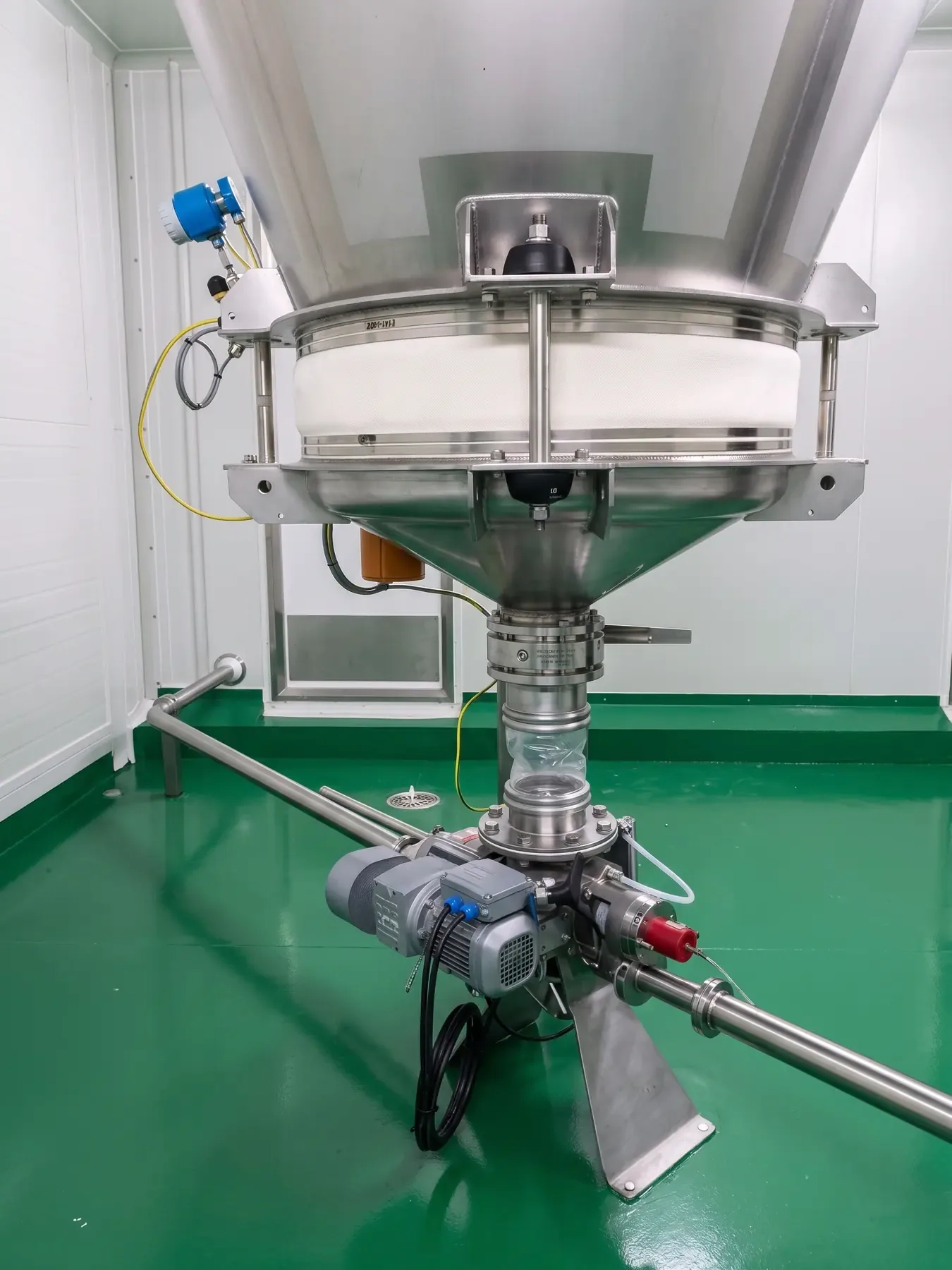
Dilute Phase Pneumatic Conveying
Product carried in suspension on a fast air stream — the simplest pneumatic system, and the right one for robust powders.
View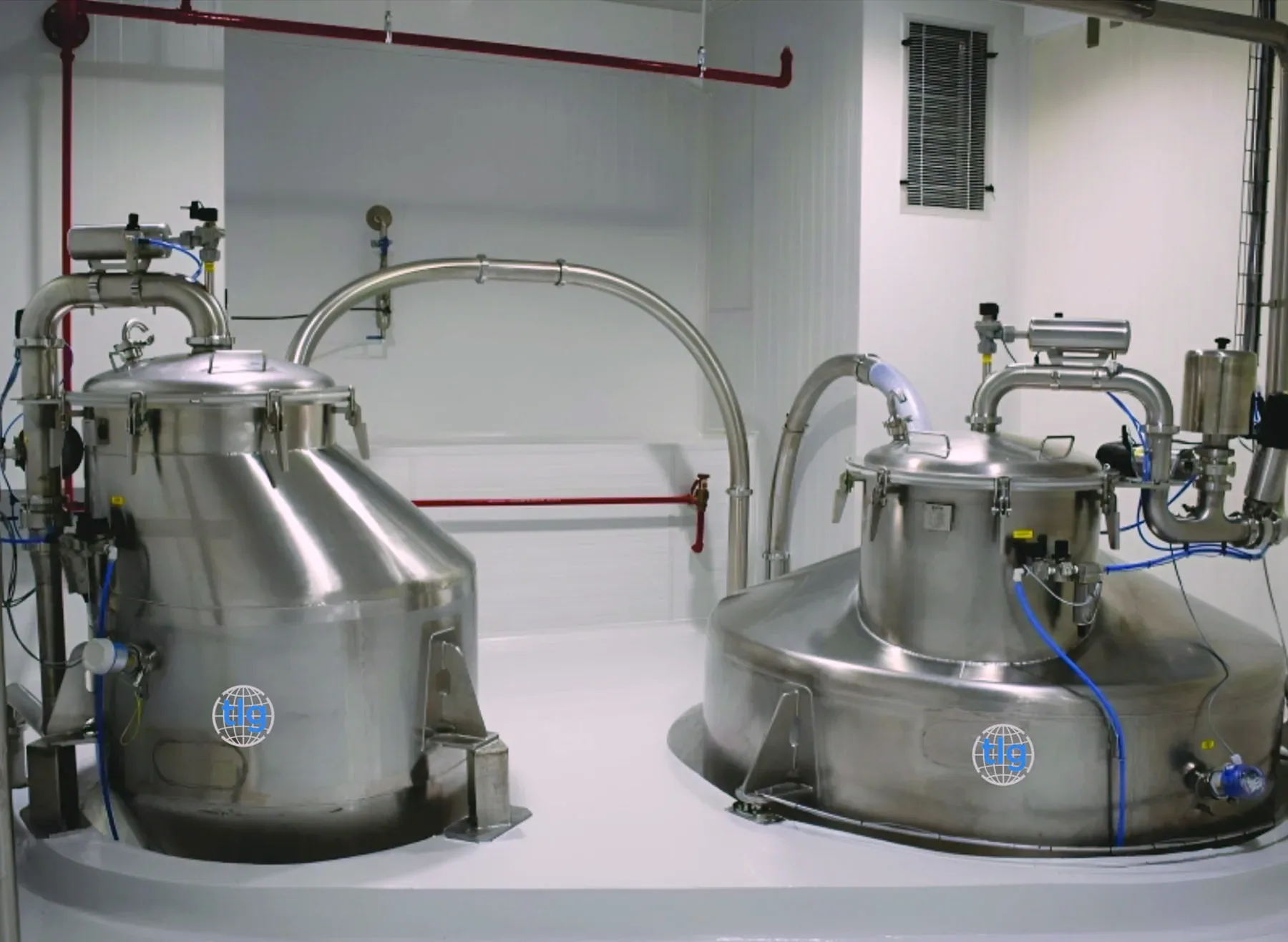
Vacuum Conveying Systems
Under vacuum, a leak pulls room air in — never powder out. The inherently contained method for hygiene-critical and hazardous transfer.
View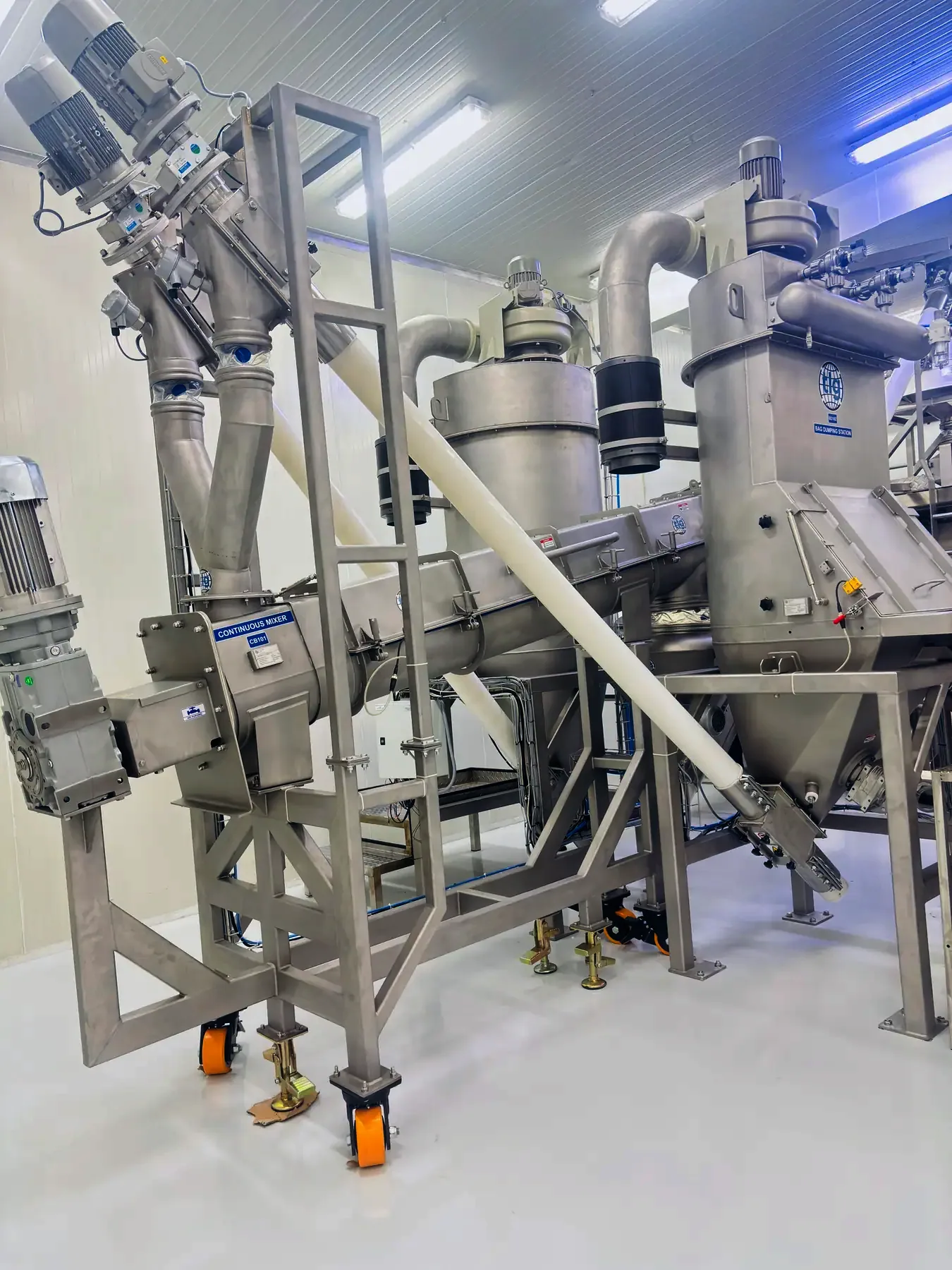
Flexible Screw Conveyors
A spiral turning inside a tube — no bearings at the product end, one moving part, and a price that makes it the first option checked.
View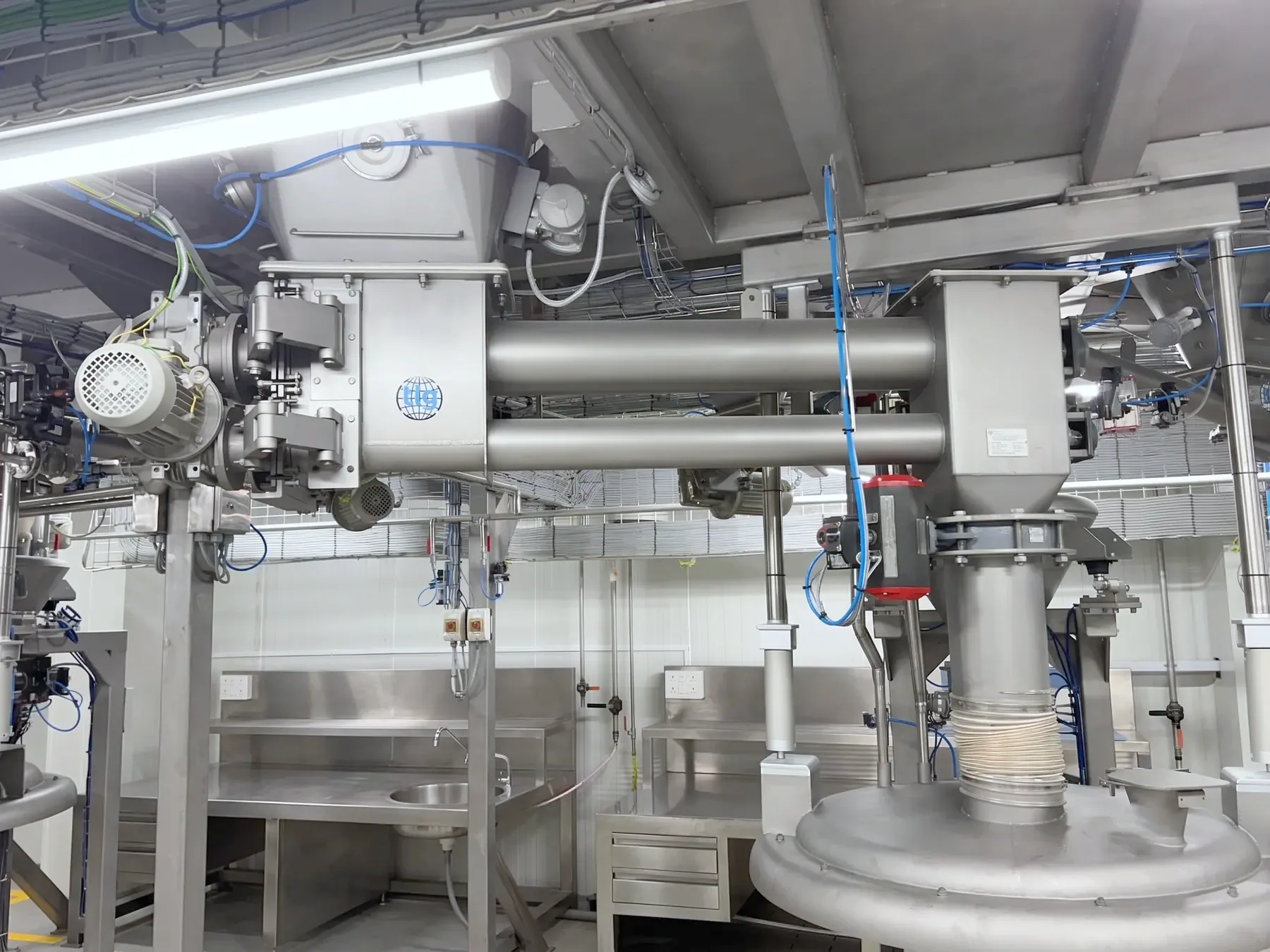
Screw & Auger Conveyors
The auger has moved bulk material for two thousand years because it works: contained, predictable, and controllable down to dosing accuracy.
View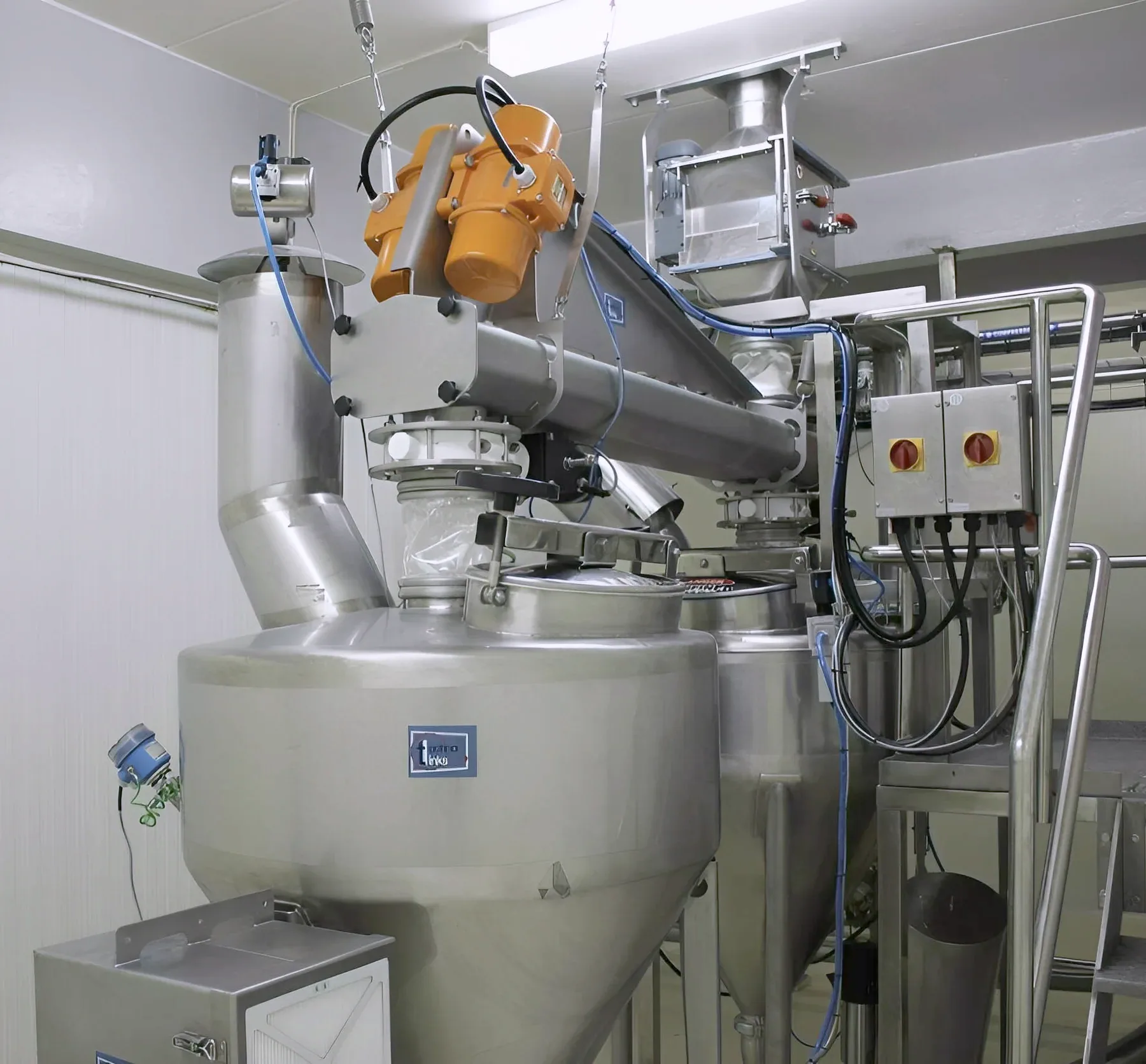
Vibratory Feeders
No flights, no pinch points — product walks along a vibrating tube. The gentlest mechanical transfer there is.
View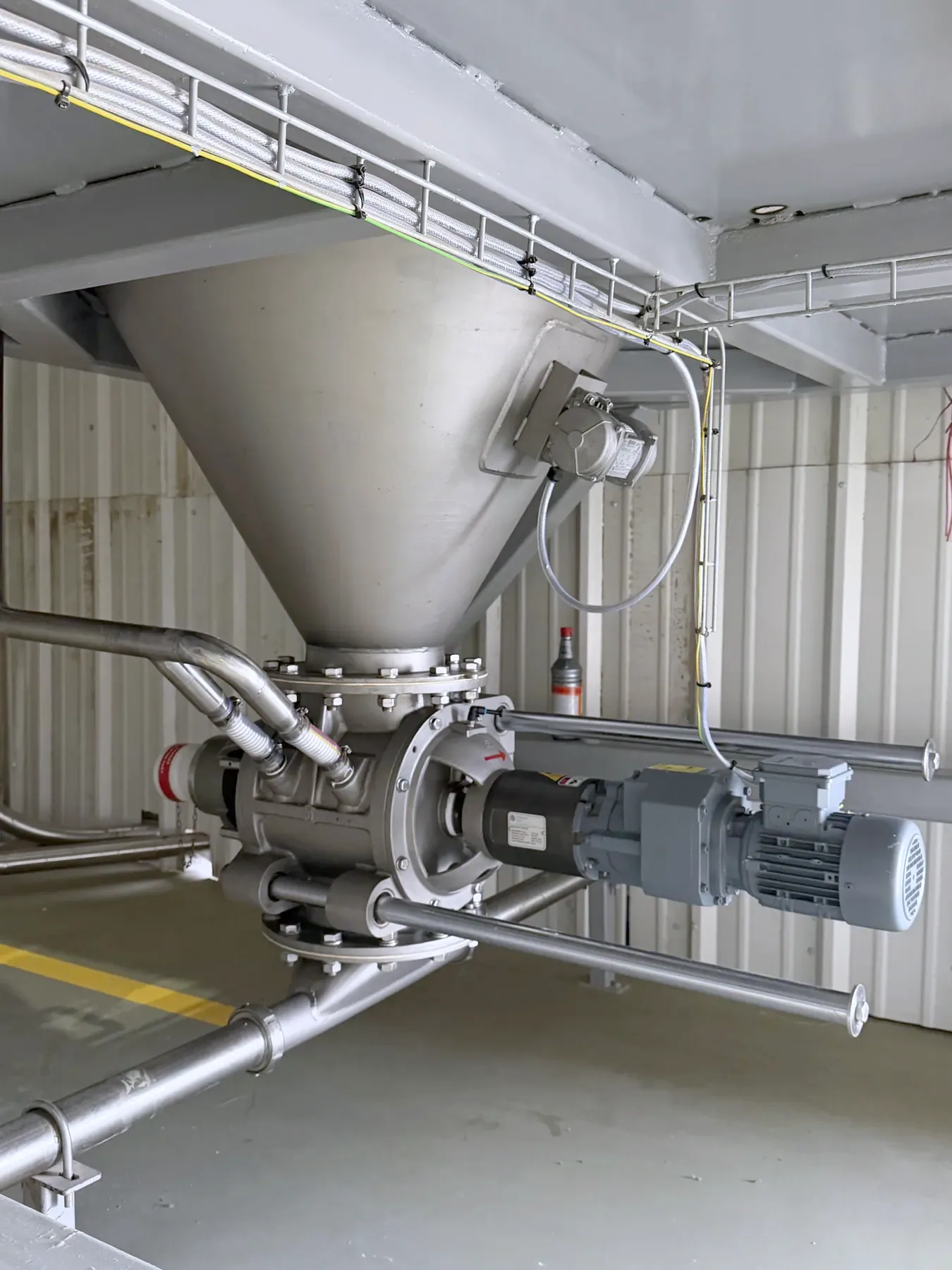
Rotary Valves & Airlocks
The component every pneumatic system depends on: powder passes down, pressure stays put.
ViewCommon questions
Frequently asked questions.
- What is the difference between pneumatic and mechanical conveying?
- Pneumatic conveying moves powder through an enclosed pipe using air, so the route can bend around a plant and the product stays contained. Mechanical conveying moves it physically — a screw or vibratory tray. Pneumatic suits long or complex routes and dust-sensitive products; mechanical suits short runs, gentle handling and high throughput.
- What are the methods of conveying powder?
- Four families cover most plants: dilute phase pneumatic (high air, product in suspension), dense phase pneumatic (low velocity, product in slugs), vacuum conveying, and mechanical conveying by screw or vibratory feeder. Selection depends on the powder's abrasiveness and friability, the distance, and the required rate.
Related
Related pages.
Discuss your project.
Talk to an engineer.
Send the material, throughput and plant constraints. You’ll get a considered answer from an engineer, not a brochure.