
Blog — Packaging · 5 min read
Bulk bag
handling safety
Restraint, densification and dust containment when filling and discharging FIBCs.
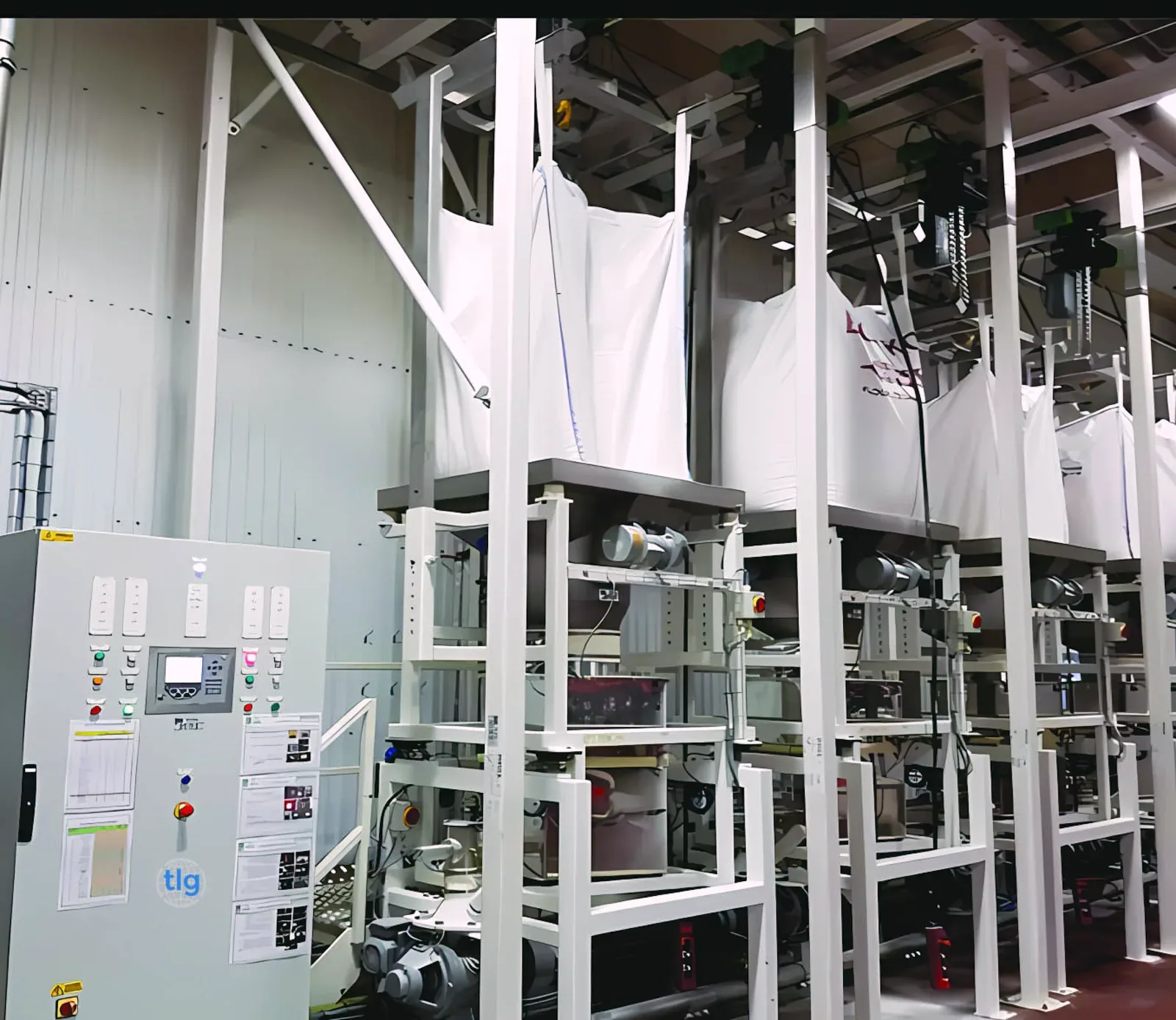
In short
Safe bulk bag (FIBC) handling rests on four disciplines: proper restraint (all four loops on rated equipment, never a forklift tine through one loop), densification during filling so bags stack stably, dust containment through sealed spout connections, and static control — earthing, and the correct FIBC type (A/B/C/D) for the powder and zone.
The post
Restraint — the non-negotiable
A filled FIBC weighs up to two tonnes and has no rigid structure. It must hang from all four loops on a rated frame or lifting beam, or sit square on a pallet — never swing from a single tine, never stand tilted. Fillers and dischargers exist to make correct restraint the only possible way to use them.
The post
Densification — stability engineered in
Powder settles. A bag filled without densification settles in the warehouse instead — leaning, bulging and threatening every stack it joins. Vibrating the bag during filling settles the powder while the bag is still held square, producing a dense, stable, stackable unit and honest volumes.
The post
Dust — seal before you open
The rule for both filling and discharge: make the sealed connection first, move powder second. Filling heads seal the spout with an inflatable collar before product flows; discharge stations clamp the spout into a contained chamber before it is untied. Displaced air goes to extraction, not the room.
The post
Static — the invisible hazard
Powder flowing into or out of a woven plastic bag generates static charge, and many powders form explosive clouds while doing it. FIBC types matter: Type C bags conduct charge to earth (and must actually be earthed); Type D dissipate charge without an earth connection. In zoned areas, bag type, earthing points and equipment certification are specified together — not left to the warehouse.
Common questions
Frequently asked questions.
- How should a bulk bag be lifted safely?
- By all four loops, on rated equipment — a lifting frame, spreader beam or the four-loop hooks of a filler or discharger. Never by one or two loops, never dragged, and never with the load over people. Loop angles should stay near vertical to avoid overloading them.
- What are Type C and Type D bulk bags?
- Static-protection classes. Type C bags are conductive and must be connected to earth during filling and discharge; Type D bags dissipate static safely without earthing. Types A and B offer no or limited protection and don't belong in combustible dust zones.
Related
Related pages.
Discuss your project.
Talk to an engineer.
Send the material, throughput and plant constraints. You’ll get a considered answer from an engineer, not a brochure.