
Packaging — FIBC discharge
Bulk bag unloaders
for contained discharge.
A tonne of powder in a woven bag, emptied into your process without a haze in the room — that is the whole specification.
In brief
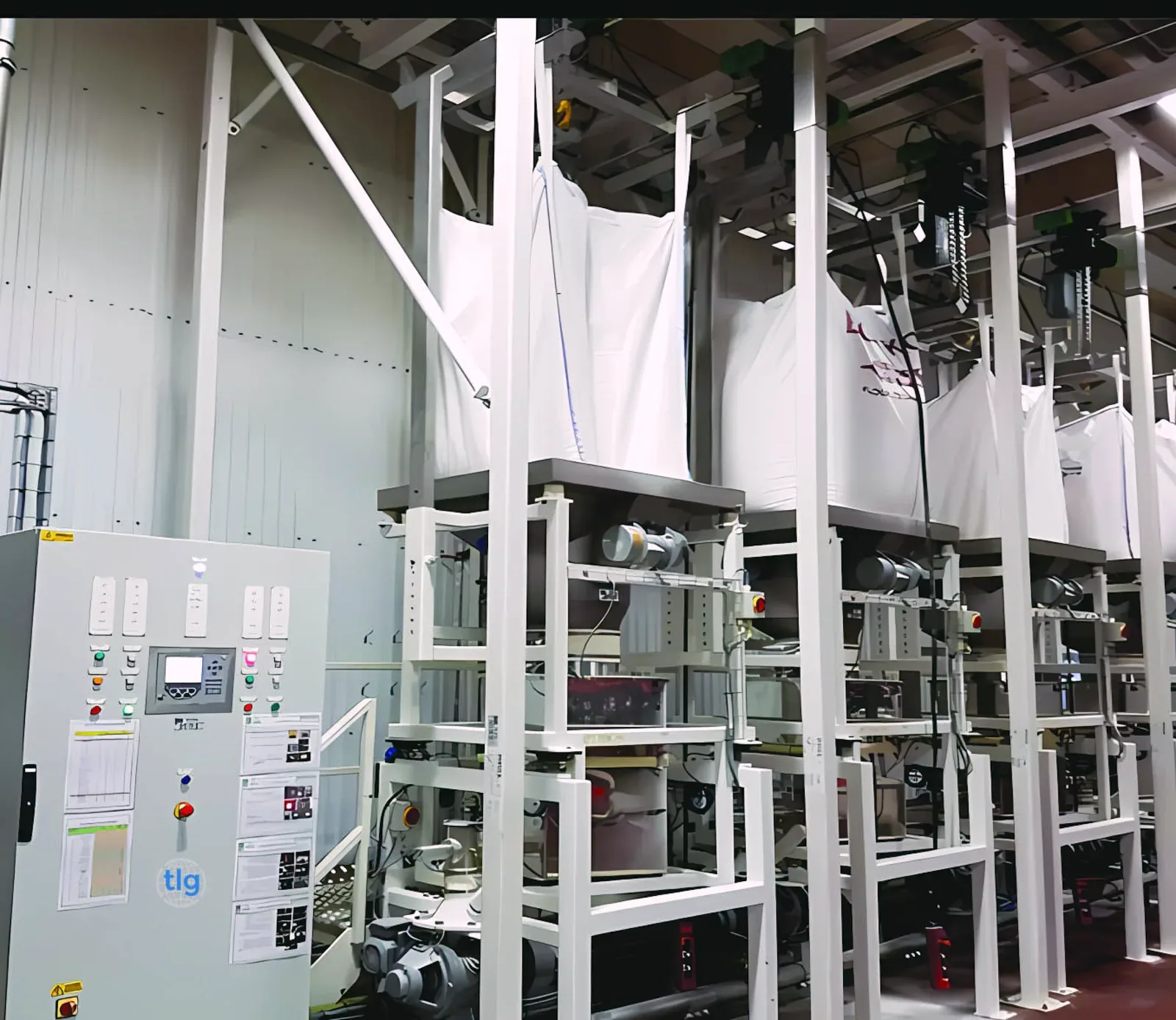
A bulk bag unloader suspends a full FIBC over a discharge hopper, clamps its spout into a dust-tight connection, and empties it into the process — with massage paddles working bridged or compacted product loose. TLG builds unloaders with forklift or hoist loading and the downstream feeder integrated.
In detail
How it works.
Powders compact in transit; a bag that discharged freely at the supplier arrives bridged. Massage paddles, spout tensioning and controlled aeration recover flow without opening the seal — which is the difference between a contained process and a shovel.
- Loading
- Forklift frames or integral hoist and trolley
- Connection
- Dust-tight spout clamp; glove-box options for potent powders
- Flow aids
- Massage paddles, spout tensioners
- Downstream
- Integrated screw, vibratory or pneumatic take-away
Common questions
Frequently asked questions.
- How do you unload a bulk bag without dust?
- Clamp the bag spout into a sealed connection before untying it — the untie happens inside a contained chamber, and displaced air vents through extraction rather than the room. Massage paddles then keep product moving without ever opening the seal.
Related
Related pages.
Discuss your project.
Talk to an engineer.
Send the material, throughput and plant constraints. You’ll get a considered answer from an engineer, not a brochure.