
Case study — Food
Dry ingredient intake and sieving,
Food
Bulk bag discharge into sieving and weighing for a food manufacturer, with dust extraction designed into the line rather than bolted on.
In brief
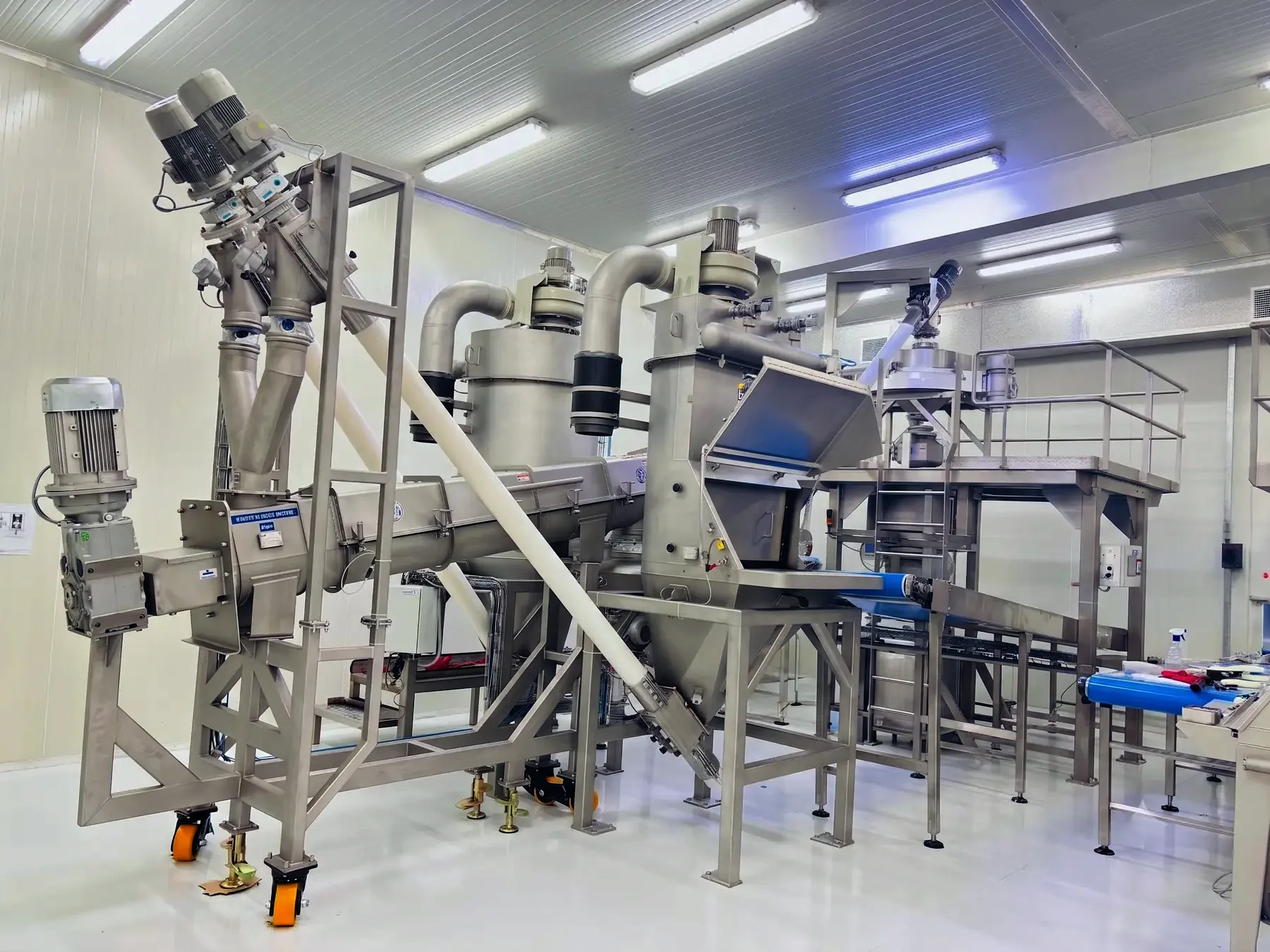
For a food manufacturer, TLG built a dry ingredient intake line: bulk bag discharge stations with dust-tight spout connections, check-sieving, and weighed delivery into the process — with dust extraction engineered into the line from the first drawing rather than added after commissioning.
The project
The brief
Replace manual sack handling with bulk bag intake across the plant's major dry ingredients, cut airborne dust to modern hygiene expectations, and weigh every addition into the process.
The project
What TLG built
Bulk bag discharge frames with clamped, dust-tight spout connections and massage paddles for the cohesive ingredients that arrive compacted. Below each, check-sieves guard the process, and weighed hoppers meter ingredients to recipe.
The difference from a catalogue solution was the extraction: pickup points at every transfer were designed with the line, ducted to a reverse-jet filter sized for the whole system. Captured product that hygiene rules allowed went back into the process instead of the waste stream.
The project
Why it worked
Dust control designed-in beats dust control bolted-on: capture velocities were engineered per point rather than divided among whatever a retrofit fan could spare. The operators got a cleaner room; the quality team got sieve and weigh records; maintenance got one system with one logic.
At a glance
Scope.
- Scope
- Intake · sieving · weighing
- Feature
- Integrated dust extraction
Related
Related pages.
Discuss your project.
Talk to an engineer.
Send the material, throughput and plant constraints. You’ll get a considered answer from an engineer, not a brochure.