
Pneumatic — dense phase
Dense phase
pneumatic conveying.
Low velocity, high pressure — the powder moves as slugs, not a sandblast. The method of choice for friable dairy products and abrasive duties.
In brief
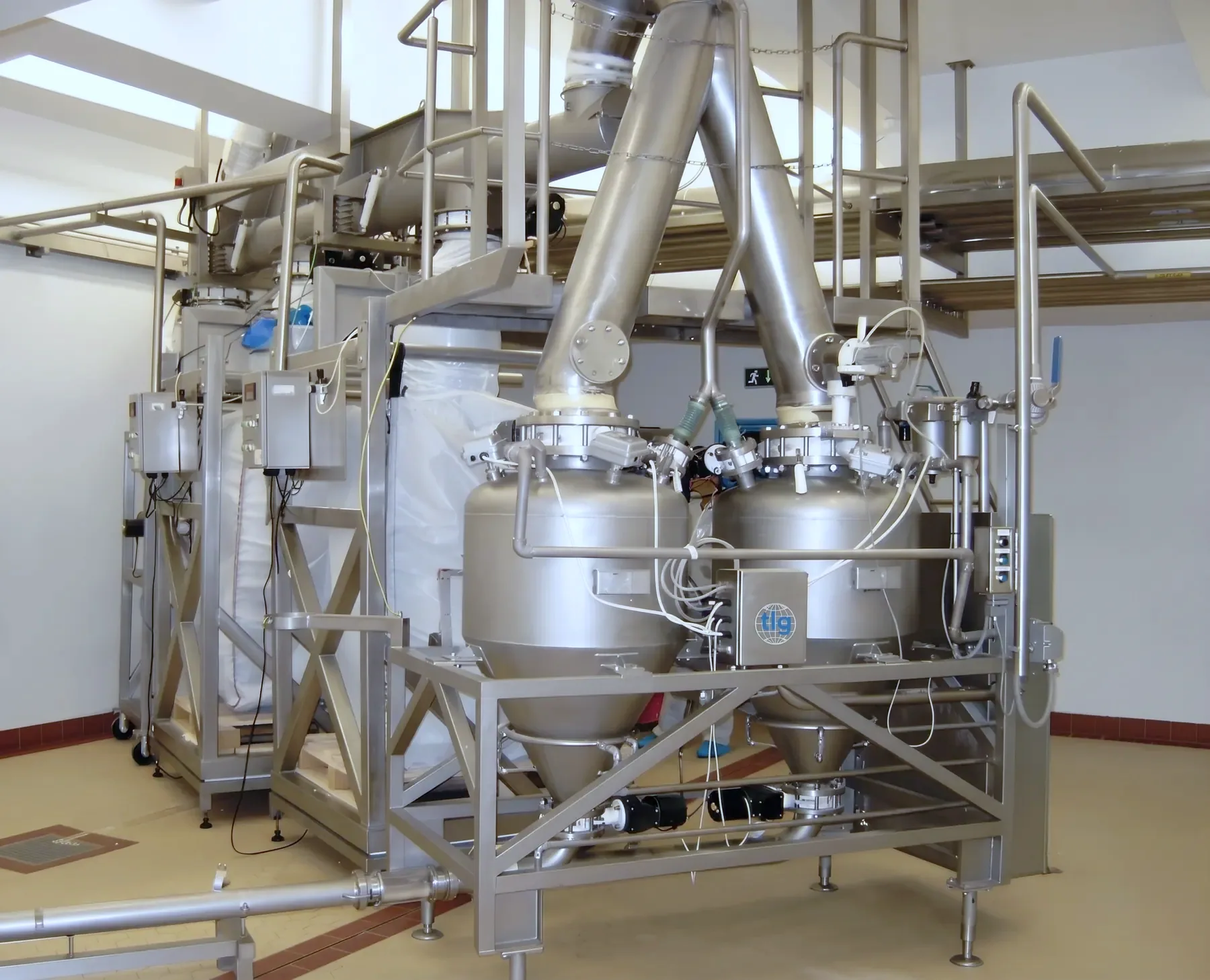
Dense phase pneumatic conveying moves powder as slugs at low velocity (typically 1–8 m/s) using higher pressure air from a pressure-pot transmitter. Low velocity protects friable products like milk powder and infant formula from degradation, and dramatically reduces pipeline and bend wear on abrasive materials.
In detail
How it works.
In a dense phase system a pressure vessel (the pot) is filled from the hopper above, sealed, pressurised, and its contents pushed into the convey line as discrete slugs. Air assists along the line keep the slugs moving without accelerating them to product-damaging speeds.
The trade is complexity for care: dense phase is the more involved system, and it earns its place wherever product degradation, bulk-density change or pipeline wear carries a cost — which in dairy powders, it almost always does.
- Velocity
- Typically 1–8 m/s — an order below dilute phase
- Feed
- Pressure-pot transmitter with dome or disc valve
- Best for
- Friable dairy powders · abrasive minerals · blend integrity
- Line
- Heavy-wall stainless with air-assist boosters as required
Common questions
Frequently asked questions.
- When is dense phase conveying the right choice?
- Whenever the powder's condition matters: friable agglomerated dairy powders that must not break down, blends that must not segregate, or abrasive materials that wear dilute-phase bends. Engineers specify dense phase where product quality and pipeline life outweigh the simpler system.
Related
Related pages.
Discuss your project.
Talk to an engineer.
Send the material, throughput and plant constraints. You’ll get a considered answer from an engineer, not a brochure.