
Conveying — pneumatic
Pneumatic conveying
systems for powders.
Powder moved through an enclosed pipeline on air — the route bends where the plant needs it to, and the product never sees the room.
In brief
A pneumatic conveying system transfers dry powder or granules through an enclosed pipeline using air. Dilute phase carries material in suspension at higher velocity; dense phase pushes it as slugs at low velocity and higher pressure, protecting fragile product and reducing pipe wear. TLG engineers both, sized to the material and the route.
In detail
How it works.
The choice between dilute and dense phase is a property of the powder. Milk powder, infant formula and agglomerated products are friable — dilute-phase velocities break them down and change bulk density at the packing line. Dense phase moves them gently. Abrasive minerals cut long-radius bends at dilute velocities; dense phase multiplies bend life.
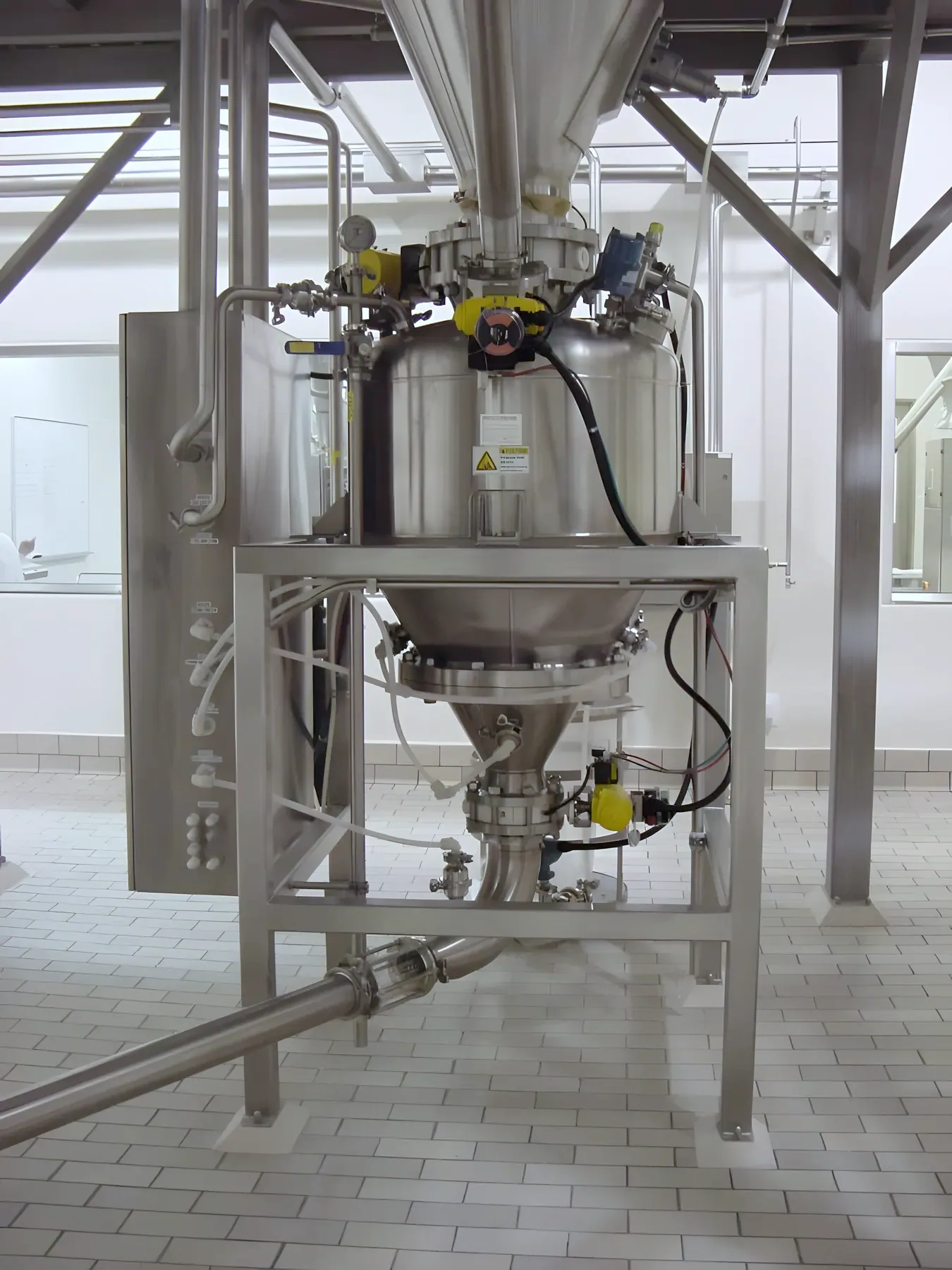
TLG builds the complete system: pressure pot or rotary-valve feed, convey pipework with long-radius bends, line termination cyclones or filters, and the controls that sequence it — engineered against the storage and packaging either side.
- Modes
- Dense phase (pressure pot) · dilute phase (rotary valve feed) · vacuum
- Product care
- Low-velocity dense phase for friable dairy and food powders
- Pipework
- Stainless convey lines, long-radius bends, diverter valves
- Termination
- Cyclone or filter receivers with dust-controlled venting
- Hazardous duty
- ATEX / IECEx zoned designs for combustible powders
Common questions
Frequently asked questions.
- What is a pneumatic conveying system?
- A pneumatic conveying system moves dry bulk material through an enclosed pipeline using air — either blown (pressure) or drawn (vacuum). Because the route is a pipe rather than a machine, it can turn corners and change levels freely, and the product stays fully contained from pickup to delivery.
- What is the primary hazard associated with pneumatic conveying systems?
- Combustible dust. Fine organic powders — milk powder, flour, sugar — can form explosive atmospheres inside convey lines and receivers. The controls are engineering ones: earthing and bonding against static, ATEX/IECEx-rated components in classified zones, and explosion venting or suppression on vessels.
- What is the difference between pneumatic and vacuum conveying?
- Both use air; the pressure differs. Pressure systems push from the pickup point; vacuum systems draw toward a receiver. Vacuum is inherently contained — a leak pulls air in rather than blowing powder out — making it the usual choice for hazardous, high-value or hygiene-critical powders over short to medium distances.
Related
Related pages.
Discuss your project.
Talk to an engineer.
Send the material, throughput and plant constraints. You’ll get a considered answer from an engineer, not a brochure.