
Pneumatic — dilute phase
Dilute phase
pneumatic conveying.
Product carried in suspension on a fast air stream — the simplest pneumatic system, and the right one for robust powders.
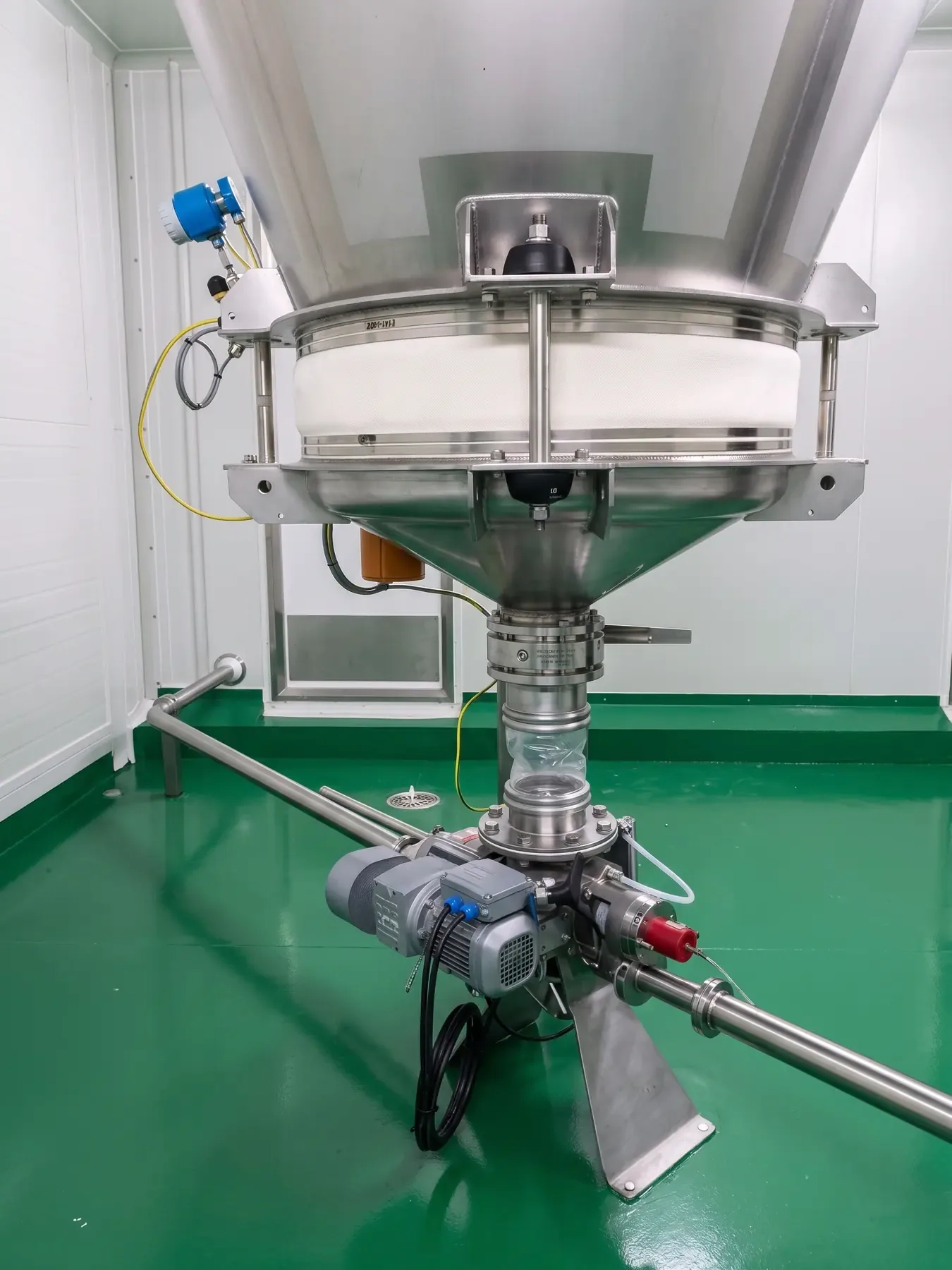
In brief
Dilute phase (lean phase) conveying suspends powder in a high-volume, low-pressure air stream, fed by a rotary valve and driven by a blower. It is the simplest and most economical pneumatic method, suited to robust, non-abrasive powders where some particle impact is acceptable.
In detail
How it works.
Air velocities of 15–30 m/s keep every particle airborne from pickup to receiver. For flours, sugars, salts and granules that shrug off impact, dilute phase delivers high rates with the least equipment: a blower, a rotary valve, pipework and a filter receiver.
Where it goes wrong is misapplication — friable agglomerates arrive as fines, and abrasive powders machine the bends. TLG's selection starts from the material data sheet, and dense phase is recommended where the powder demands it.
- Velocity
- 15–30 m/s, product in full suspension
- Feed
- Rotary valve into a blow-through adaptor
- Drive
- PD blower package, pressure or vacuum
- Best for
- Robust powders · high rates · simple routes
Common questions
Frequently asked questions.
- What is lean phase conveying?
- Lean phase is another name for dilute phase — powder carried in suspension on a high-volume air stream at relatively low pressure. The terms are interchangeable; both contrast with dense phase, where material moves as slugs at low velocity.
Related
Related pages.
Discuss your project.
Talk to an engineer.
Send the material, throughput and plant constraints. You’ll get a considered answer from an engineer, not a brochure.