
Case study — Pet Food
Feed mill premix handling,
Pet Food
Receival hoppers, rigid screw conveying and premix blending across a multi-level structure for an animal feed producer.
In brief
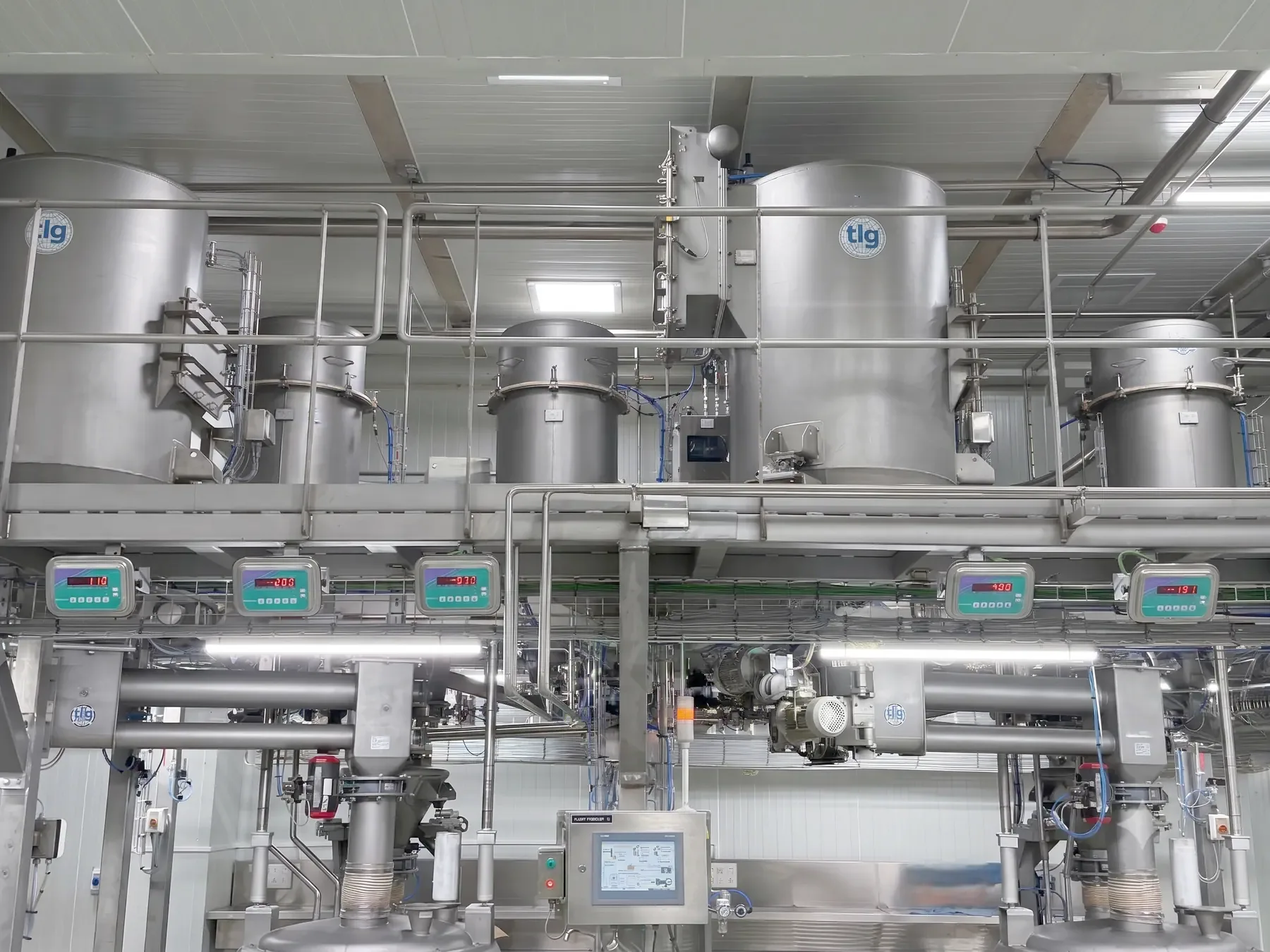
For an animal feed producer, TLG engineered premix handling across a multi-level mill structure: receival hoppers at ground level, rigid screw conveying between floors, and blending with verified micro-ingredient inclusion — feed-mill throughput with food-grade traceability.
The project
The brief
Bring premix preparation in-house across an existing multi-storey mill building — receive macro ingredients in bulk, dose vitamin and mineral concentrates at verified rates, and blend to formulation, using the building's vertical logic rather than fighting it.
The project
What TLG built
Ground-floor receival hoppers with screened, extracted openings took bulk intake. Rigid screw conveyors — chosen over pneumatic for the abrasive, high-fat meals — moved material between levels with gravity doing the return trips.
The premix station carried the precision end: micro-ingredient weighing to gram accuracy, sequenced addition into the blender, and batch records generated automatically. Blended premix discharged to the mill's existing production stream.
The project
Why it worked
Multi-level plants reward mechanical honesty: screws and gravity are cheap to run and easy to clean, and saving pneumatic transfer for where it earns its energy. The premix records turned a compliance liability into a documented process — and the mill stopped paying a toll on every tonne of bought-in premix.
At a glance
Scope.
- Scope
- Receival · conveying · blending
- Structure
- Multi-level
Related
Related pages.
Discuss your project.
Talk to an engineer.
Send the material, throughput and plant constraints. You’ll get a considered answer from an engineer, not a brochure.