
Pneumatic — vacuum
Vacuum conveying
for contained transfer.
Under vacuum, a leak pulls room air in — never powder out. The inherently contained method for hygiene-critical and hazardous transfer.
In brief
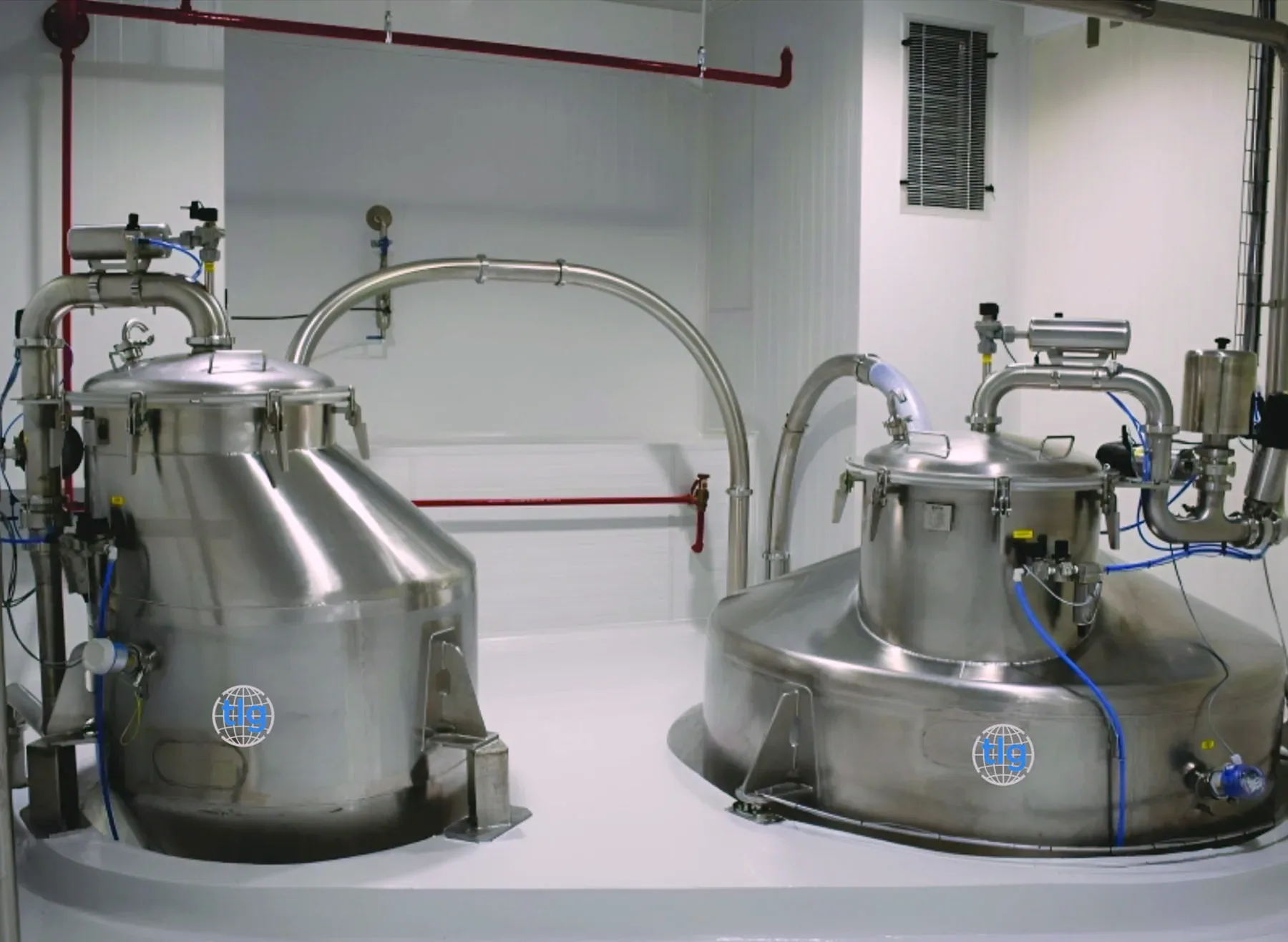
Vacuum conveying draws powder toward a receiver under negative pressure. Because any leak flows inward, containment is inherent — the reason it is preferred for hazardous, high-value and hygiene-critical powders. TLG builds vacuum systems with hygienic receivers, reverse-jet filters and tri-clamp connections for wash-down duties.
In detail
How it works.
A vacuum receiver mounts above the destination — a mixer, a packing head, a process vessel. The pump draws air through the convey line; powder rides the stream into the receiver, the filter keeps it there, and a discharge valve drops the batch when the cycle completes.
The method's limits are honest ones: vacuum can only pull so hard, so distances and rates are lower than pressure systems. Within that envelope — refill loops, mixer feeding, packing-line supply — it is the cleanest transfer there is.
- Containment
- Negative pressure — leakage is inward by physics
- Receivers
- Hygienic stainless, reverse-jet cleaned filters
- Connections
- Tri-clamp, tool-free strip-down for wash-down
- Best for
- Mixer & packing feed · hazardous and high-value powders
Common questions
Frequently asked questions.
- How does a vacuum conveying system work?
- A vacuum pump draws air through a convey line into a receiver mounted over the destination. Powder entrained in the stream collects in the receiver while a filter retains fines; when the cycle ends, a discharge valve releases the batch downward. The pump sees only filtered air.
Related
Related pages.
Discuss your project.
Talk to an engineer.
Send the material, throughput and plant constraints. You’ll get a considered answer from an engineer, not a brochure.