
Dairy — milk powder
Milk powder
handling systems.
Whole and skim milk powder are friable, hygroscopic and combustible — three properties that dictate every design decision after the dryer.

In brief
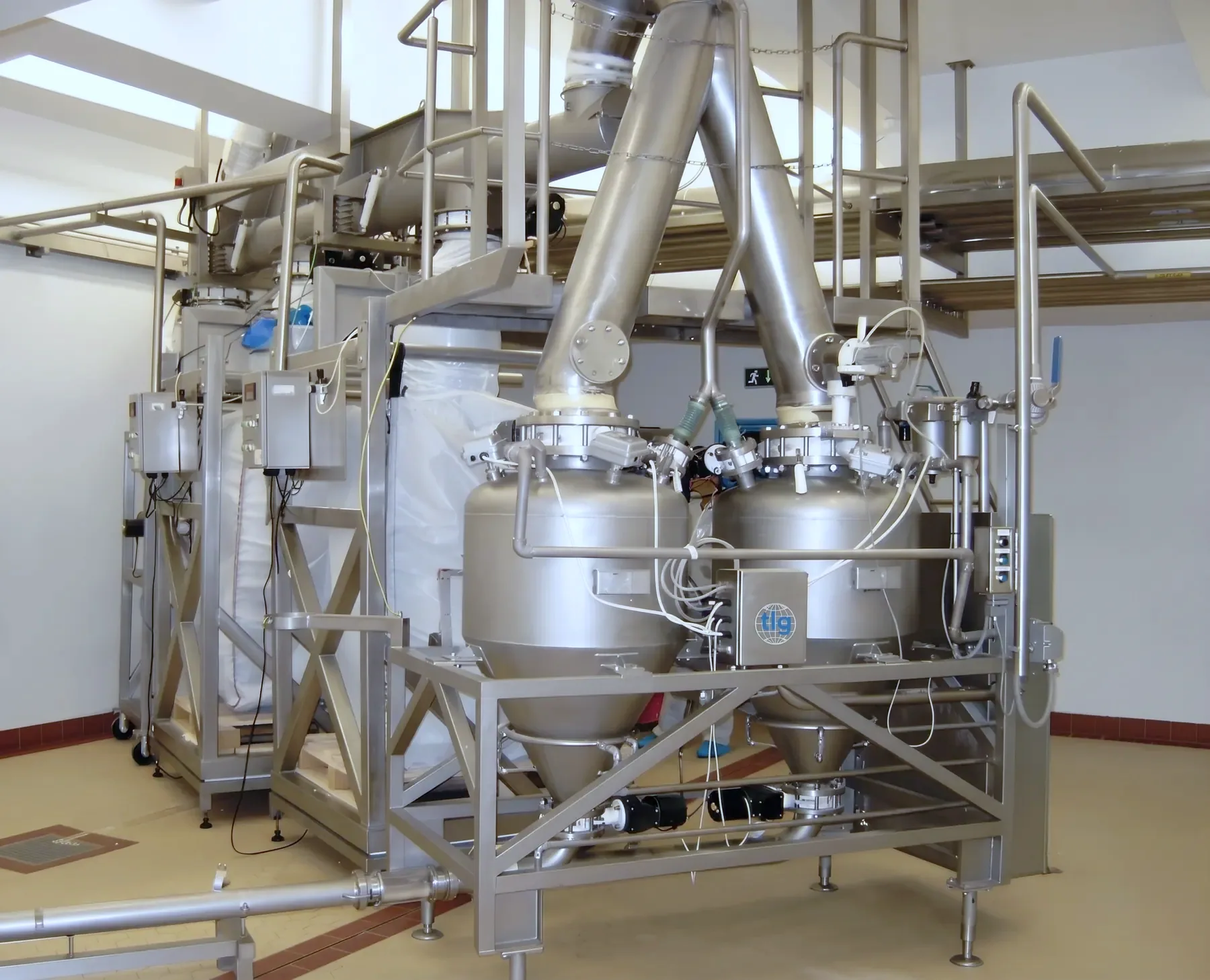
Milk powder handling systems must protect the agglomerated particle (dense-phase or vacuum conveying), exclude moisture (dry-air conveying and sealed storage), and manage combustible-dust risk (milk powder is an St 1 dust). TLG builds complete post-dryer lines: storage, conveying, sieving and bulk packing.
The powder problem
Process requirements.
Bulk density is money: break the agglomerate in transit and the same mass fills more bags, dissolves worse and downgrades. Low-velocity conveying, minimal transfer points and mass-flow storage keep the particle the dryer made.
Every milk powder line TLG builds is a dust-zoned line — earthed, isolated, vented where classification requires — because a hygiene-grade plant that ignores Kst is only half engineered.
- Risks managed
- Attrition · moisture pickup · combustible dust (St 1)
- Conveying
- Dense phase / vacuum, dry-air options
- Packing
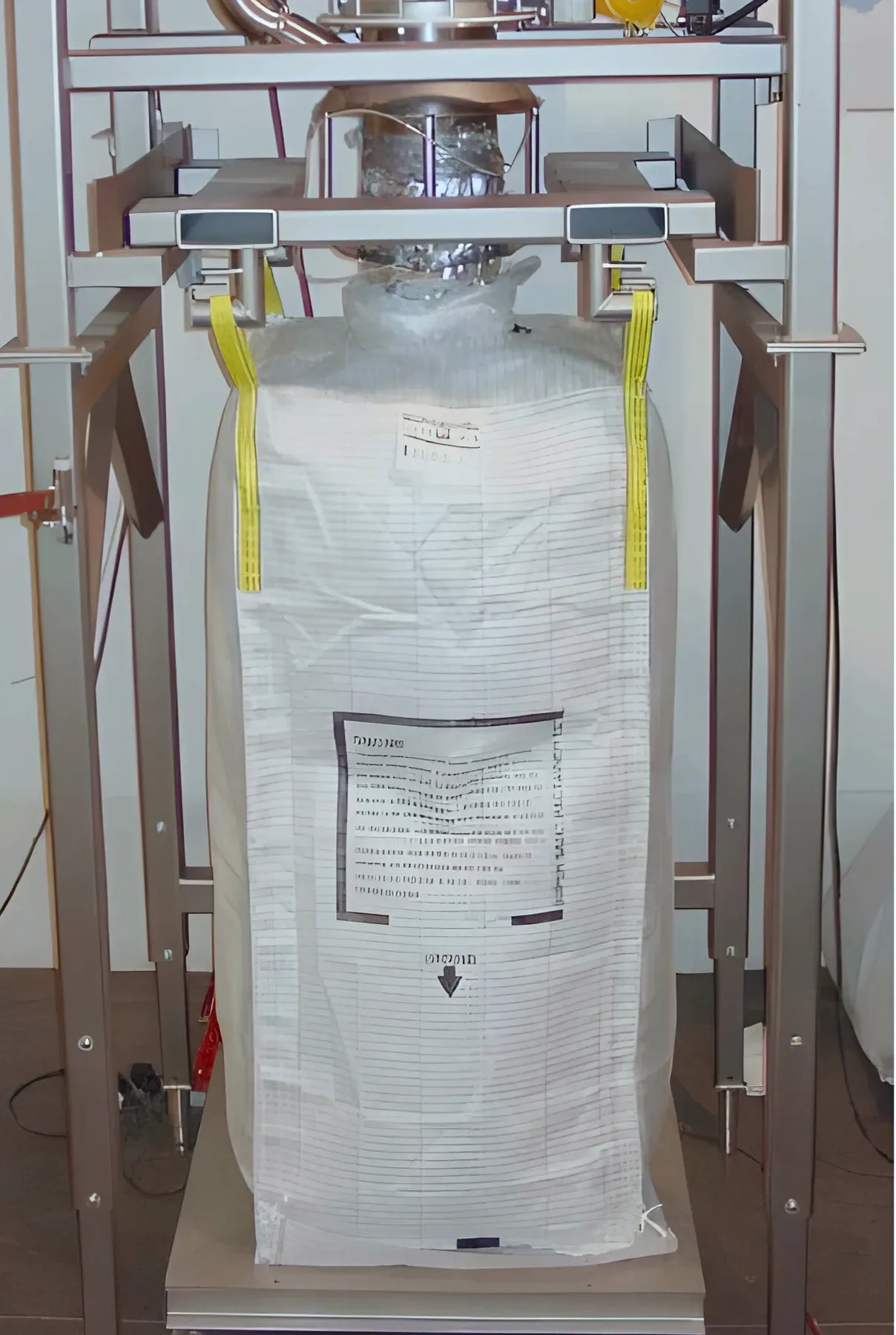
- Bulk bags, sacks, tankers — check-sieved before fill
- Traceability
- Batch records through storage and packing
The process — stage by stage
The milk powder line, stage by stage.
Every stage below is equipment TLG designs and builds — follow any of them into the solutions range.
- 01
Conveying from fluid bed dryers
Gentle transfer straight off the dryer — low-velocity conveying and check-sieving that keep the agglomerate the dryer made.
- 02
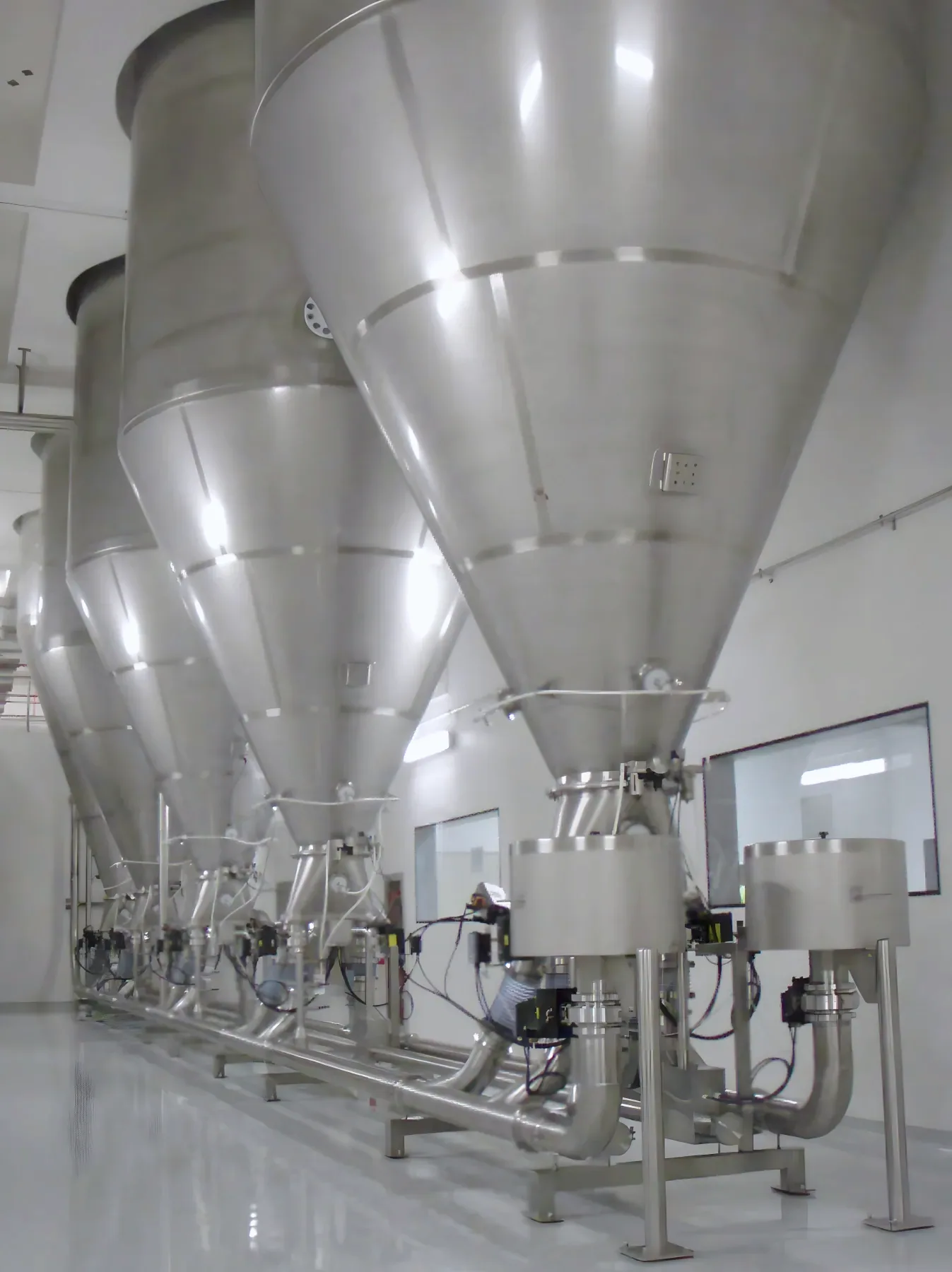
Raw material & finished goods storage
Silos with discharge engineered to the powder's measured flow properties — storage that empties reliably.
- 03
Automated batching
Every ingredient weighed to recipe on isolated load cells, majors to minors, with the batch record generated automatically.
- 04
Mixing
Blenders matched to the recipe's shear tolerance, with discharge designed so the blend survives to the pack.
- 05
Bulk packaging
Filling by weight on live load cells — densified, dust-sealed bags that stack and ship at declared weight.
- 06
Dust extraction
Capture at every transfer point, ducted to reverse-jet filtration — hygiene, compliance and recovered product.
- 07
Automation & controls
One control system sequencing the whole line — recipes, interlocks and records included.
Related
Related pages.
Discuss your project.
Talk to an engineer.
Send the material, throughput and plant constraints. You’ll get a considered answer from an engineer, not a brochure.