
Dairy — infant formula
Infant formula
powder handling.
Every jurisdiction that imports it audits it. Formula lines are built for the inspector as much as the powder.
In brief
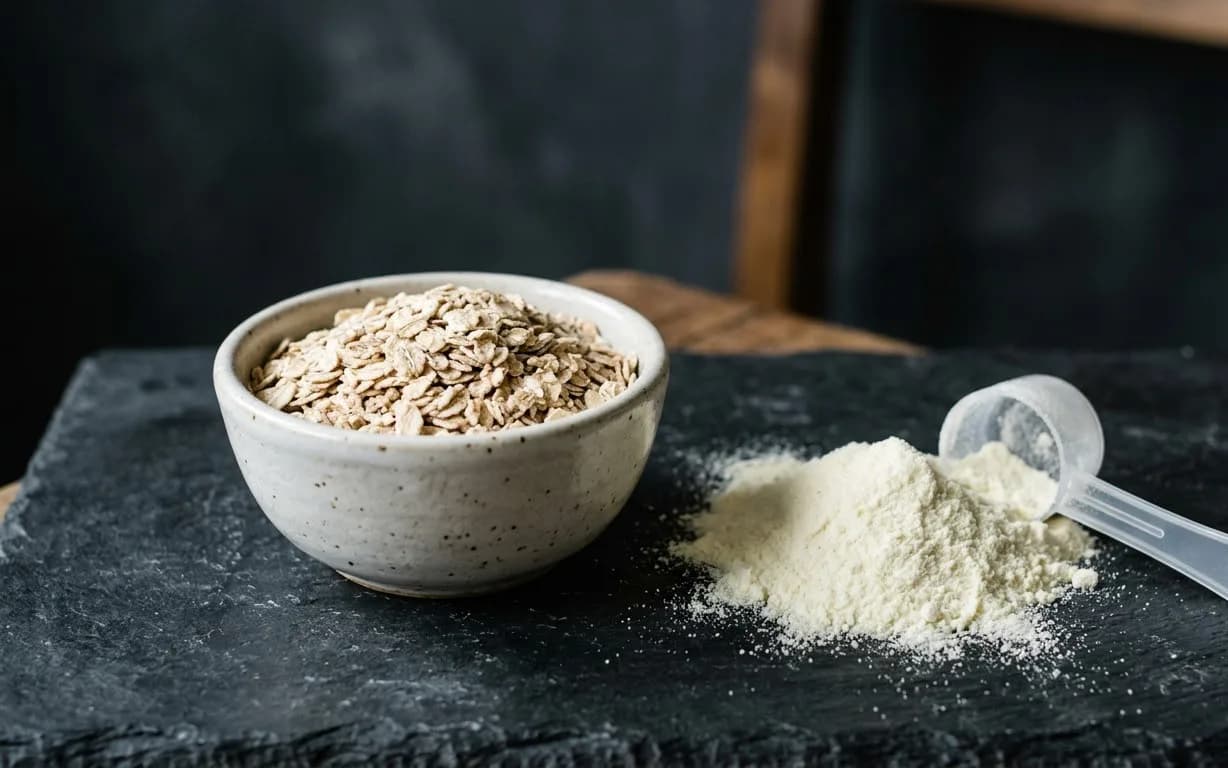
Infant formula handling combines dairy-powder care with pharmaceutical-grade discipline: hygienic zoning and crevice-free stainless, gram-accurate dosing of vitamins and minerals against registered recipes, verified check-sieving and magnetic separation, and batch records that satisfy export audit — the regime TLG builds formula lines to meet.
The powder problem
Process requirements.
Formula is a recipe product: base powder plus dozens of micro-ingredients, each dosed in grams and each recorded. The micro-dosing station is the heart of the line — precision weighing isolated from plant vibration, sequenced addition, and records generated by the control system rather than a clipboard.
Foreign-body control is layered by HACCP: screened intake, magnetic separation, check-sieving before pack — each layer inspectable and logged.
- Dosing
- Micro-ingredients to gram accuracy, recipe-driven
- Hygiene
- Crevice-free stainless, hygienic zoning
- Protection
- Sieving + magnetic separation, HACCP-placed
- Records
- Automatic batch documentation for export audit
The process — stage by stage
The infant formula line, stage by stage.
Every stage below is equipment TLG designs and builds — follow any of them into the solutions range.
- 01
Raw material intake
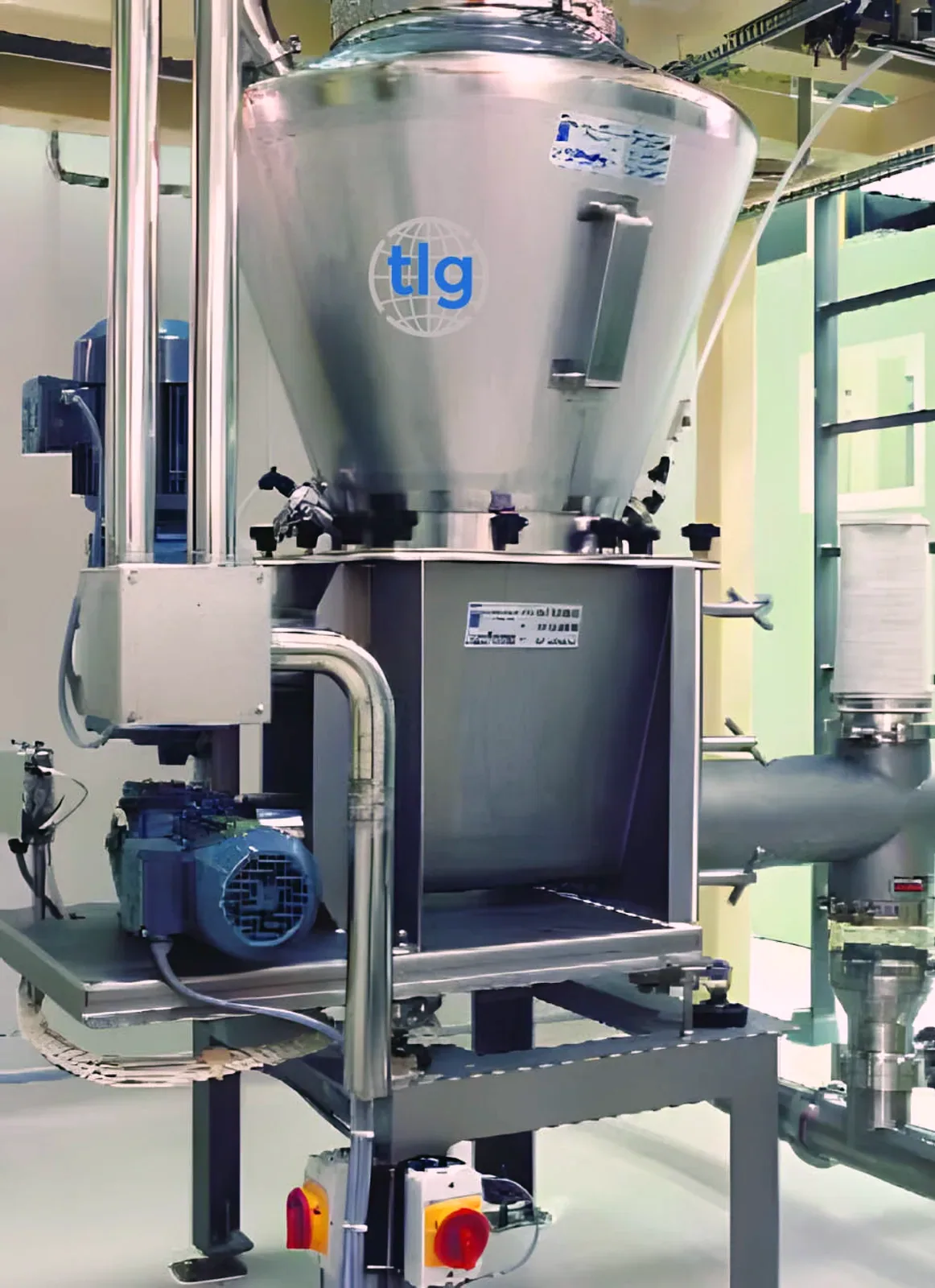
Sacks and bulk bags enter the line contained — dust captured at the tip point, foreign objects screened out.
- 02
Conveying
Transfer matched to the powder — pneumatic phase chosen for friability, mechanical for short controlled runs.
- 03
Automated batching
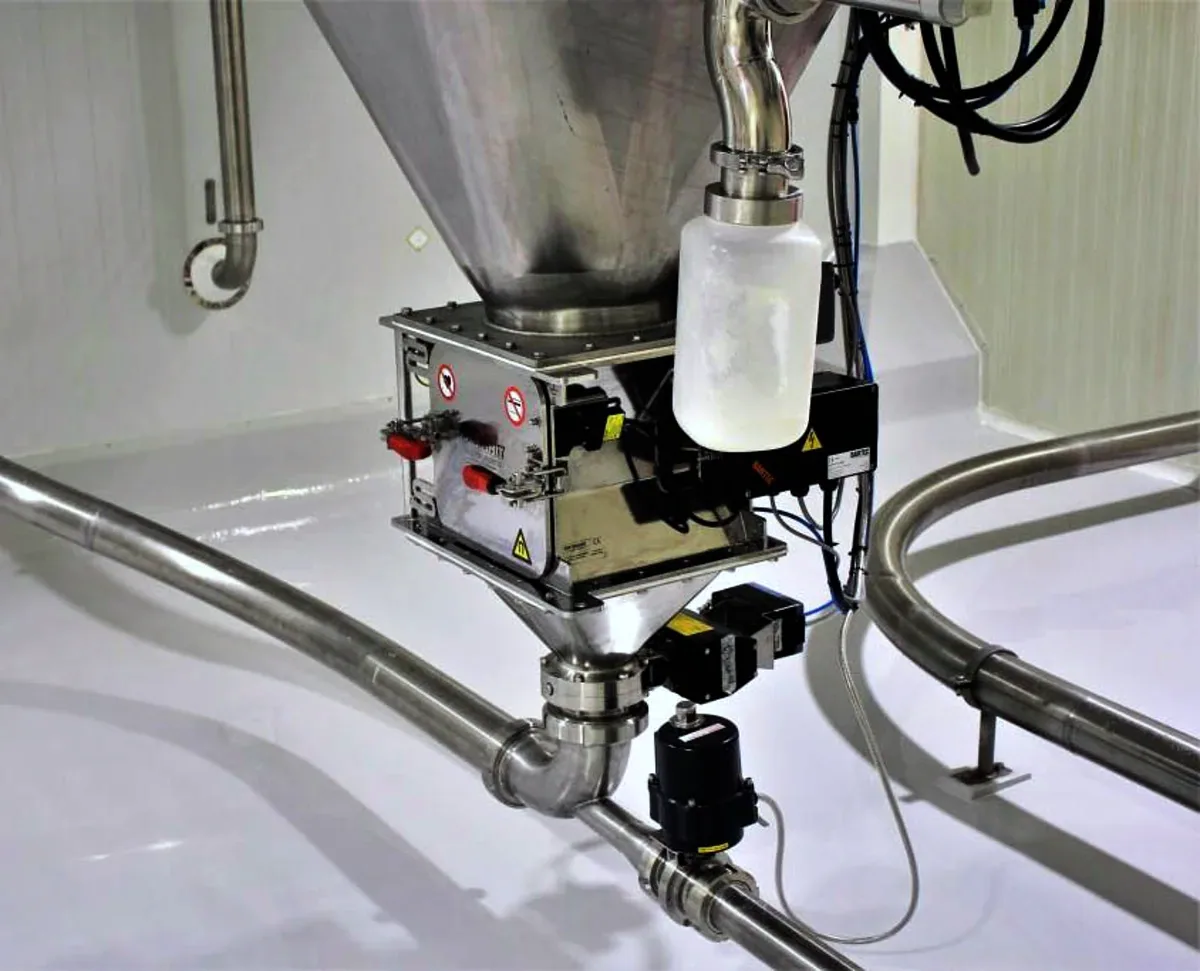
Every ingredient weighed to recipe on isolated load cells, majors to minors, with the batch record generated automatically.
- 04
Mixing
Blenders matched to the recipe's shear tolerance, with discharge designed so the blend survives to the pack.
- 05
Foreign material removal
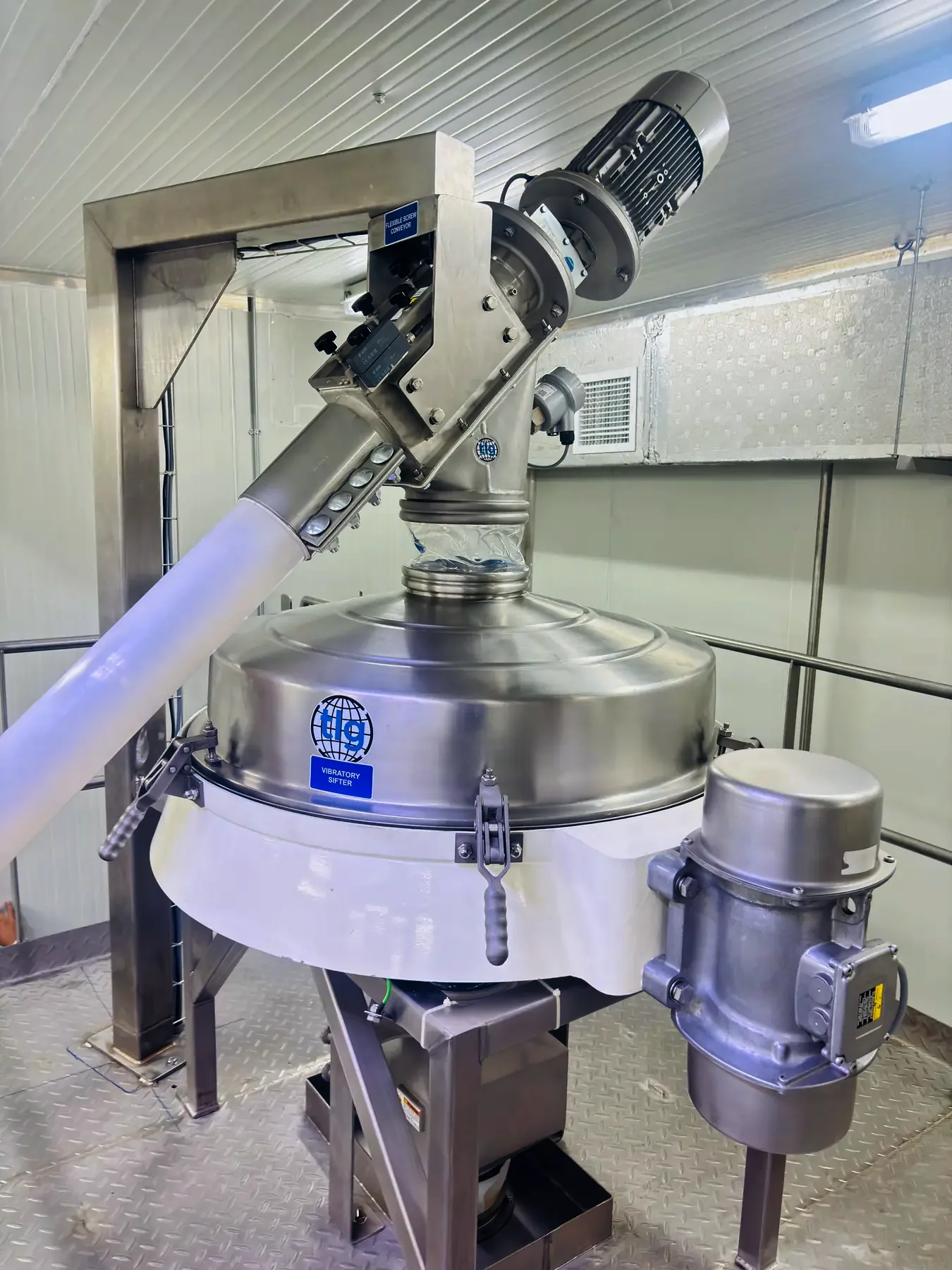
Magnets hold ferrous wear metal; check-sieves reject oversize — placed where HACCP analysis puts them.
- 06
Bulk packaging
Filling by weight on live load cells — densified, dust-sealed bags that stack and ship at declared weight.
- 07
Dust extraction
Capture at every transfer point, ducted to reverse-jet filtration — hygiene, compliance and recovered product.
- 08
Automation & controls
One control system sequencing the whole line — recipes, interlocks and records included.
Related
Related pages.
Discuss your project.
Talk to an engineer.
Send the material, throughput and plant constraints. You’ll get a considered answer from an engineer, not a brochure.