
Food — bakery
Bakery flour
handling systems.
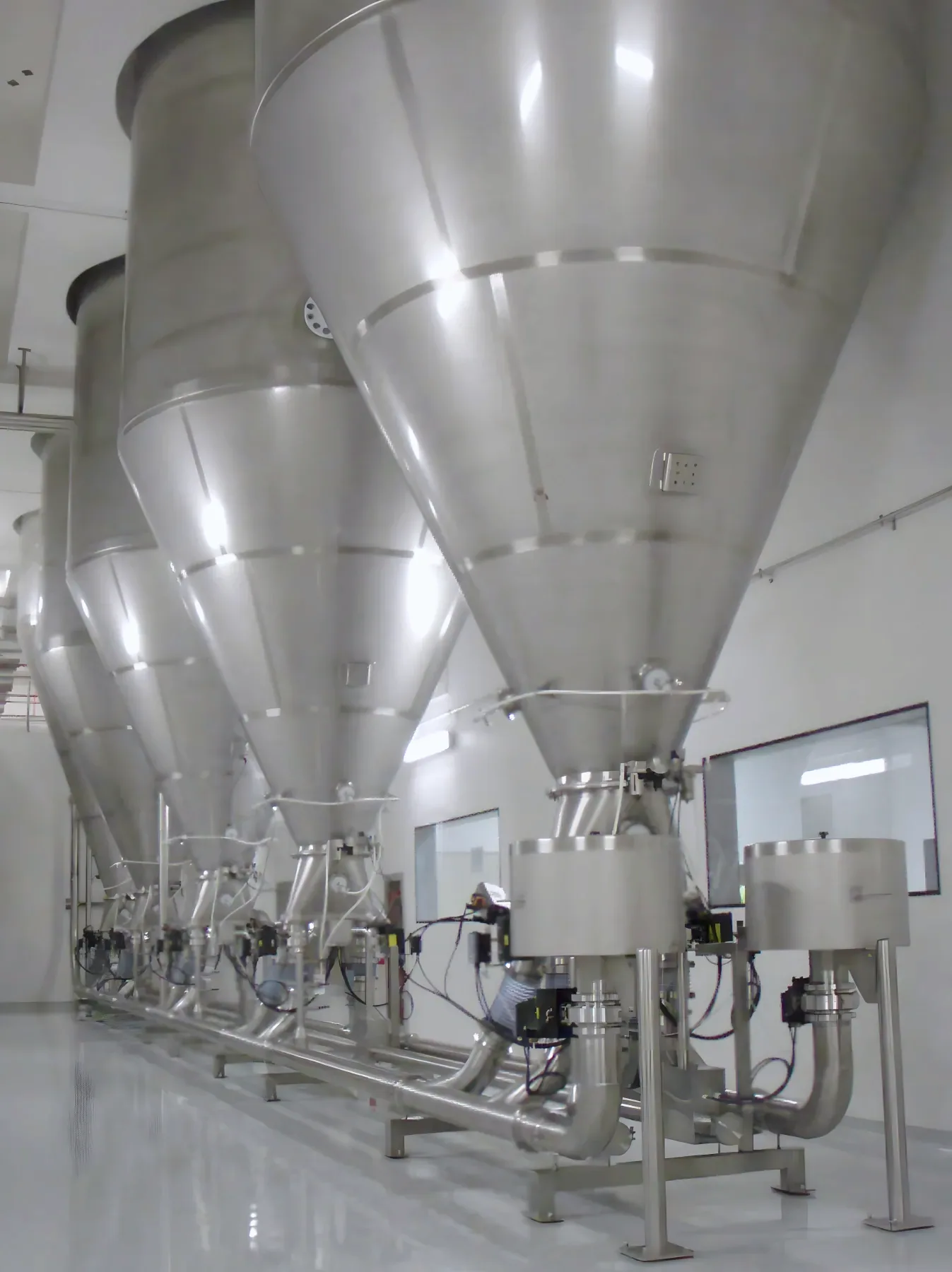
A bakery is a flour logistics operation with ovens attached — silos, sieving and weighed delivery to mixers, run to a hygiene standard.

In brief
Bakery powder handling centres on bulk flour: tanker-filled silos, sieved and weighed delivery to mixers, and minor-ingredient dosing alongside. TLG builds bakery systems with contained transfer and extraction throughout — flour dust is both a hygiene issue and a classified combustible dust.
The powder problem
Process requirements.
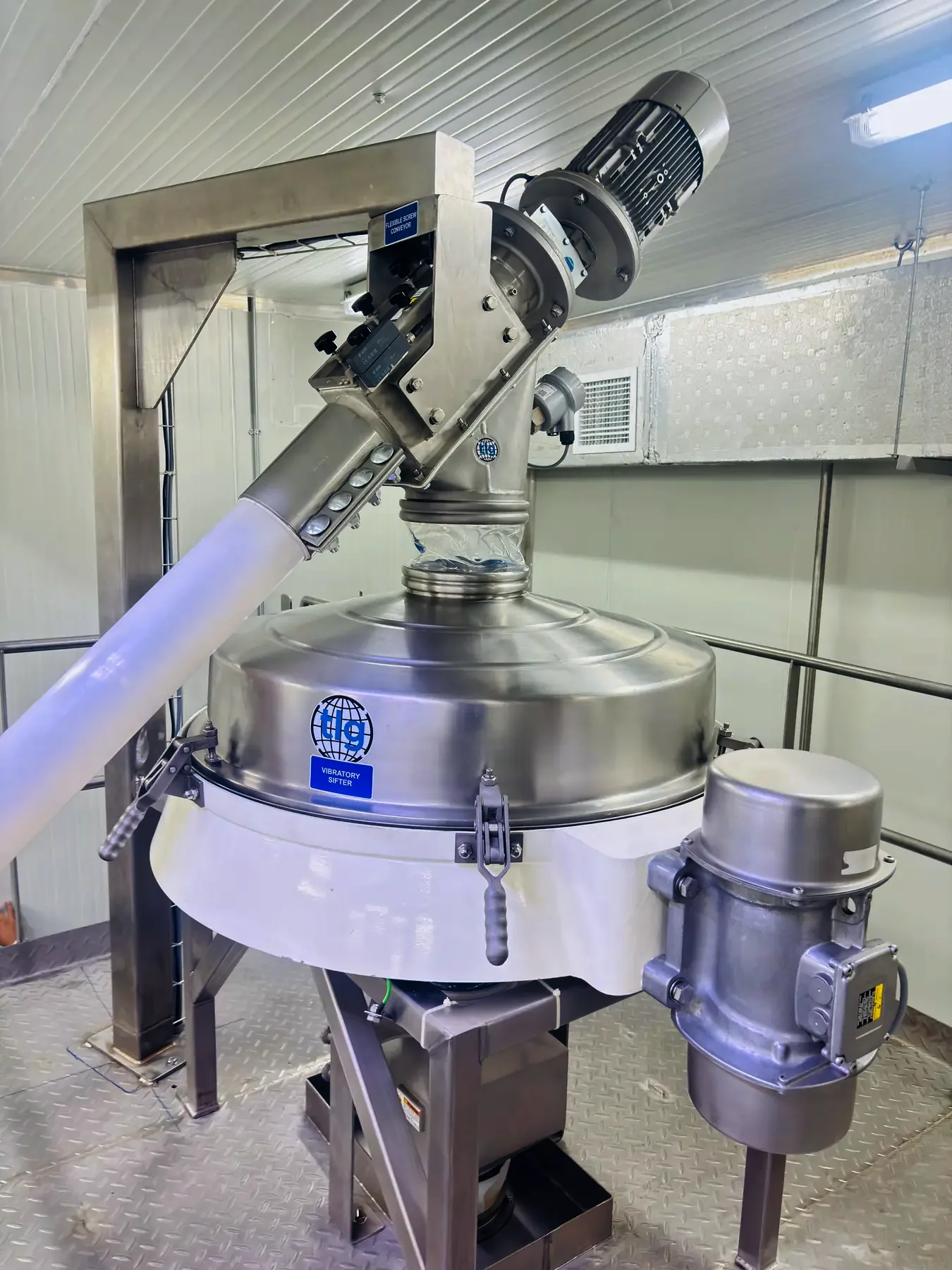
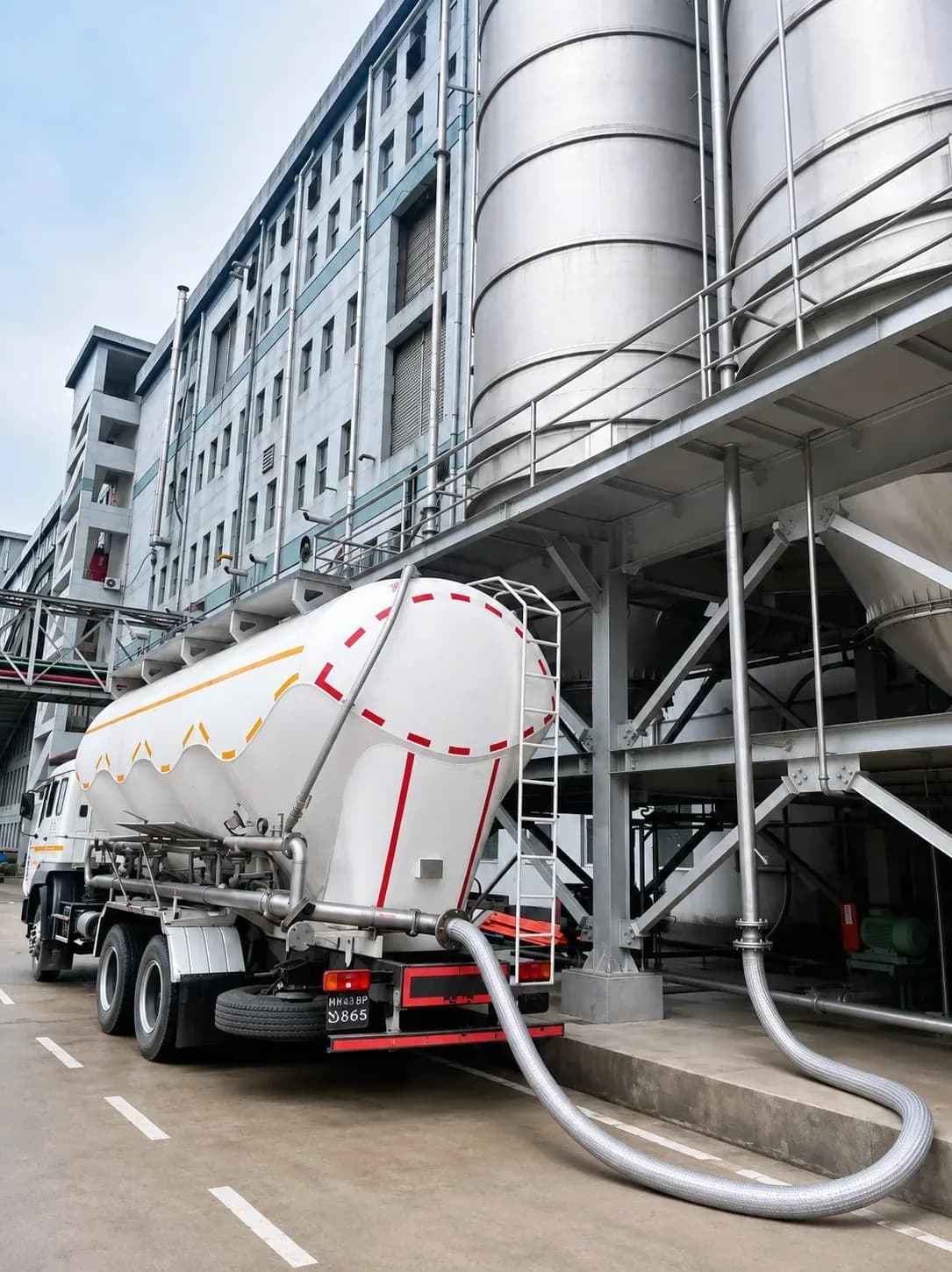
Bulk flour arrives by tanker and lives in silos; the line sieves it (insurance against string and lumps), weighs it to recipe, and delivers to mixers on demand. Minor ingredients — improvers, salt, sugar, seeds — dose from bag stations alongside. The whole path runs contained, because airborne flour is wasted product, a hygiene problem and a fuel.
- Bulk
- Tanker-filled flour silos, sieved discharge
- Delivery
- Weighed, on-demand transfer to mixers
- Minors
- Bag-tip dosing for improvers and inclusions
- Compliance
- Flour is an St 1 dust — zoned and extracted
The process — stage by stage
The bakery flour line, stage by stage.
Every stage below is equipment TLG designs and builds — follow any of them into the solutions range.
- 01
Raw material intake
Sacks and bulk bags enter the line contained — dust captured at the tip point, foreign objects screened out.
- 02
Conveying
Transfer matched to the powder — pneumatic phase chosen for friability, mechanical for short controlled runs.
- 03
Raw material & finished goods storage
Silos with discharge engineered to the powder's measured flow properties — storage that empties reliably.
- 04
Automated batching
Every ingredient weighed to recipe on isolated load cells, majors to minors, with the batch record generated automatically.
- 05
Mixing
Blenders matched to the recipe's shear tolerance, with discharge designed so the blend survives to the pack.
- 06
Foreign material removal
Magnets hold ferrous wear metal; check-sieves reject oversize — placed where HACCP analysis puts them.
- 07
Bulk packaging
Filling by weight on live load cells — densified, dust-sealed bags that stack and ship at declared weight.
- 08
Dust extraction
Capture at every transfer point, ducted to reverse-jet filtration — hygiene, compliance and recovered product.
- 09
Automation & controls
One control system sequencing the whole line — recipes, interlocks and records included.
Related
Related pages.
Discuss your project.
Talk to an engineer.
Send the material, throughput and plant constraints. You’ll get a considered answer from an engineer, not a brochure.