
Pet food — animal & aqua food
Animal & aqua food
processing systems.
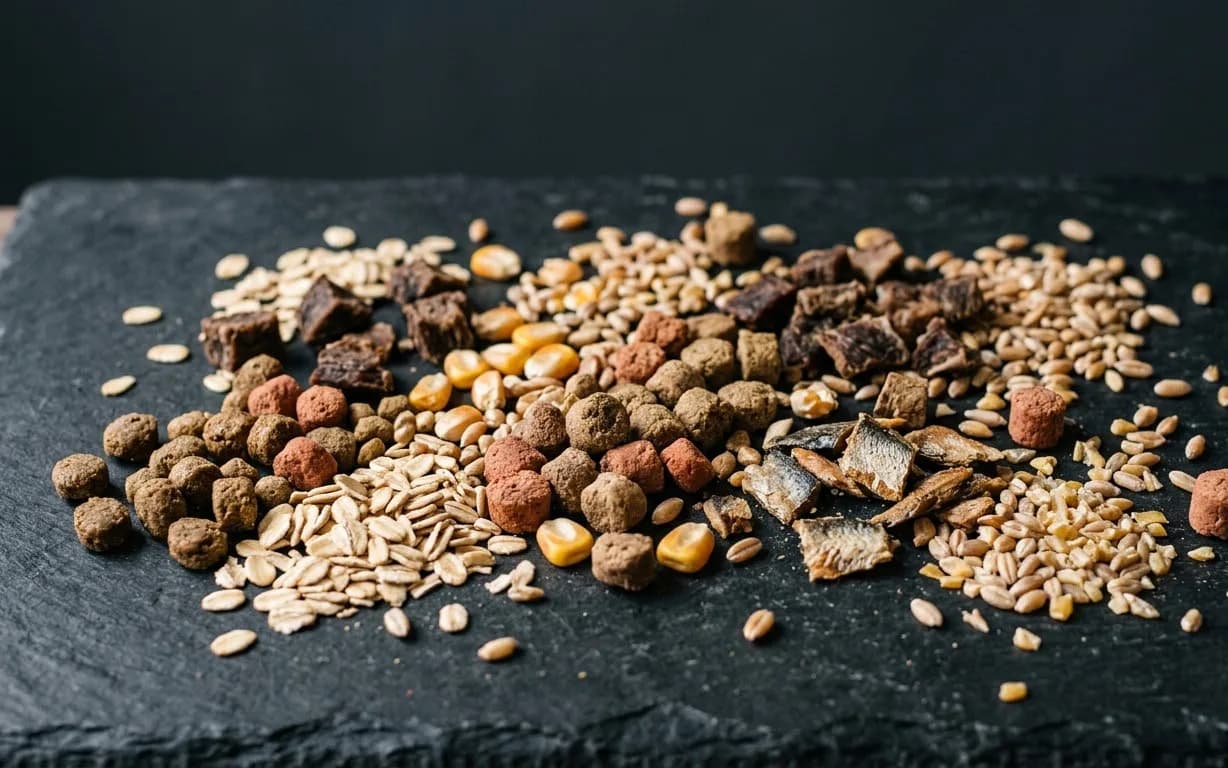
Nutritionally balanced products for livestock, poultry and aquatic animals — grains, proteins, vitamins, dried meat, minerals and additives, handled as one line.
In brief
Animal and aqua feed are nutritionally balanced products tailored to the dietary requirements of livestock, poultry and aquatic animals, incorporating grains, proteins, vitamins, dried meat, minerals and additives. TLG offers process solutions from raw material handling to storage — engineered for the product consistency and quality international standards demand.
The powder problem
Process requirements.
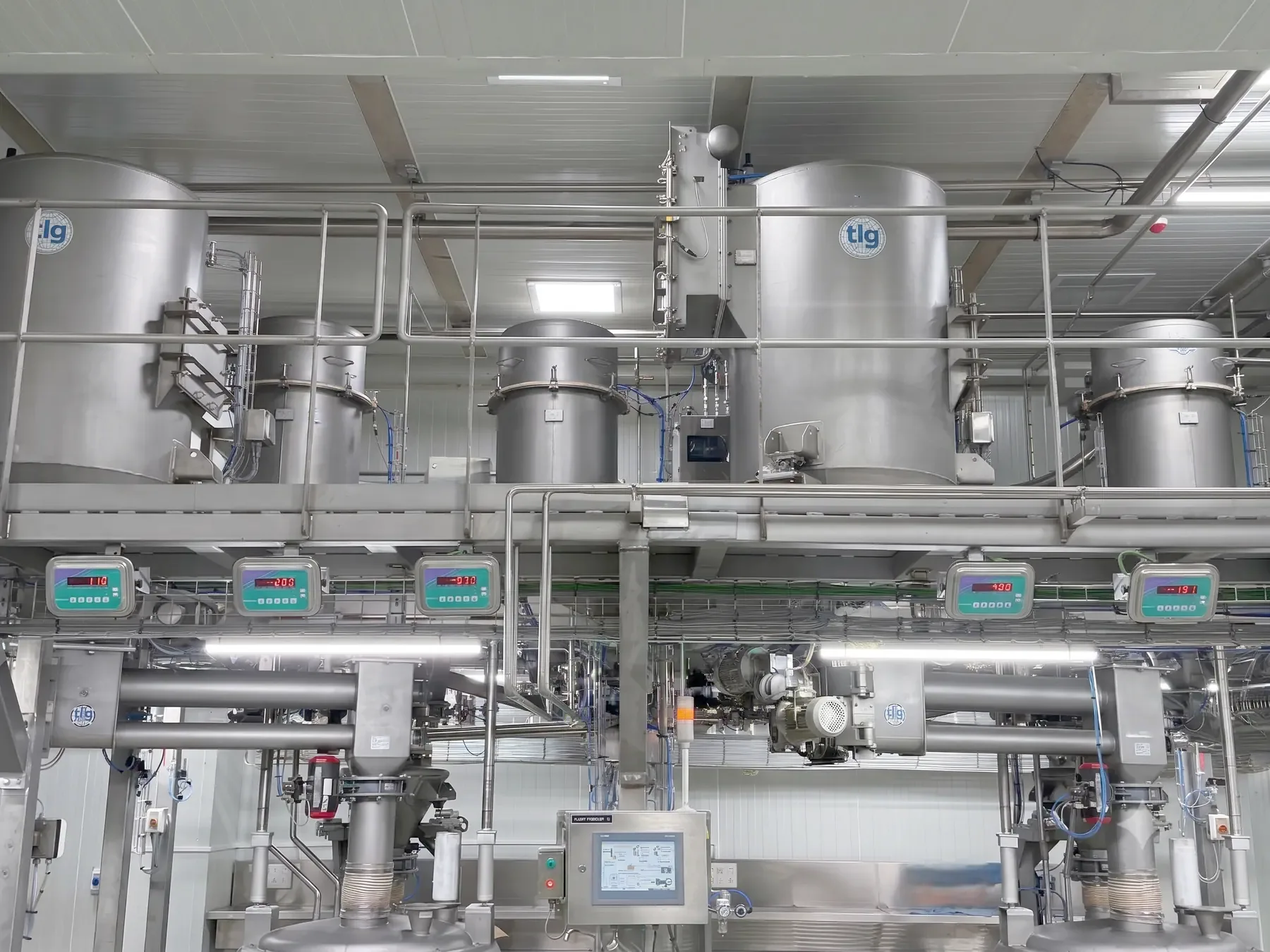
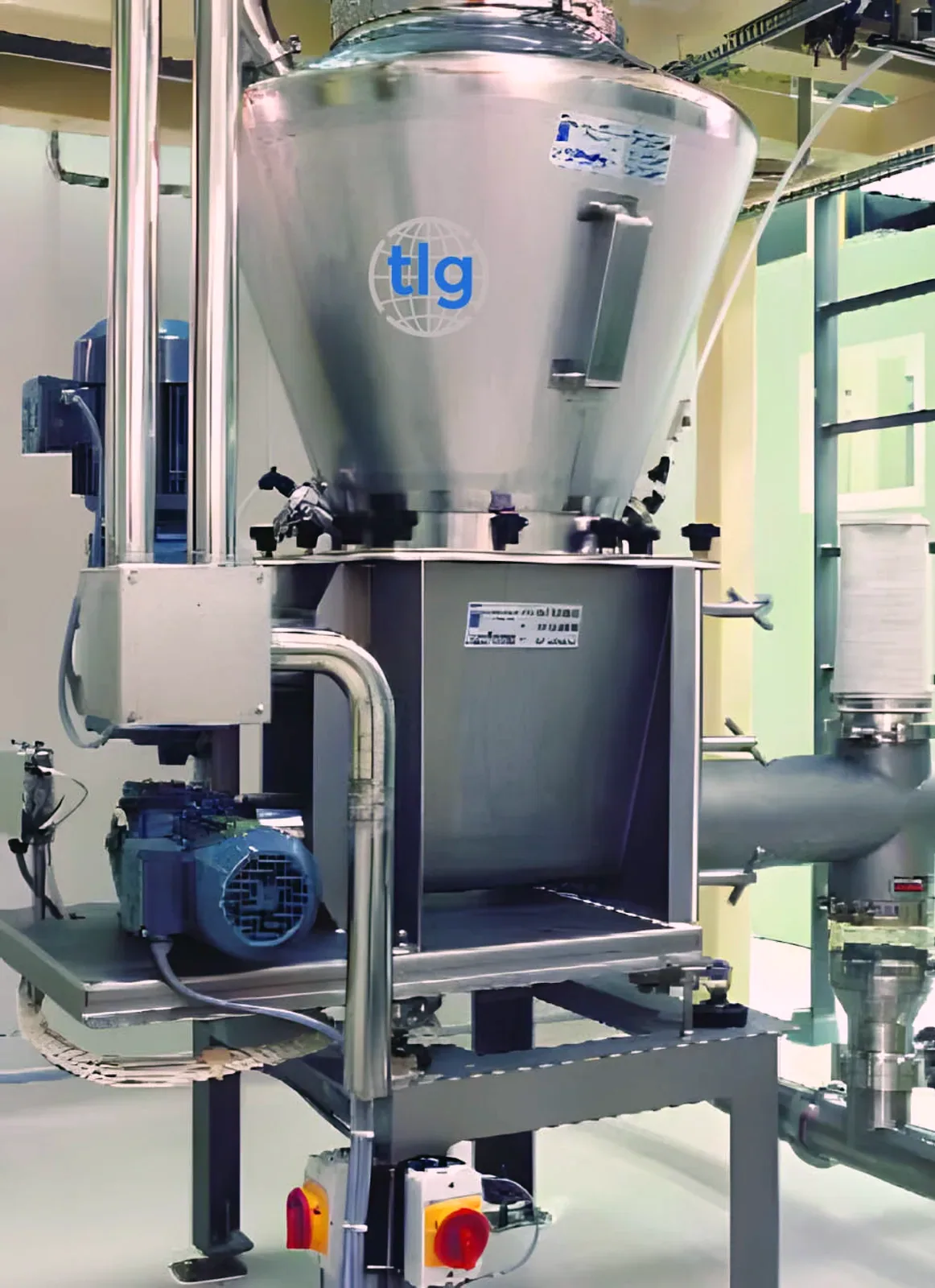
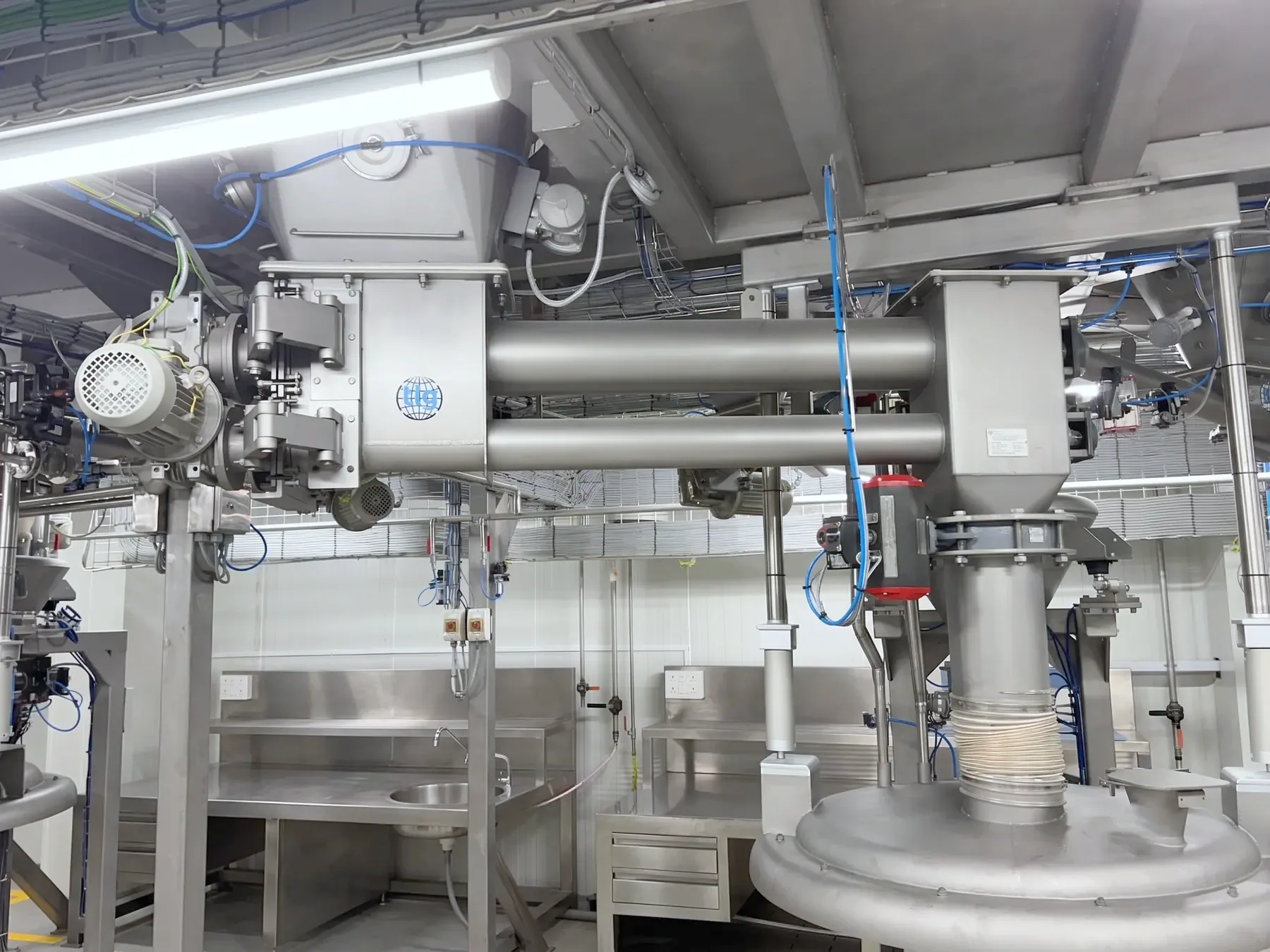
Feed manufacturing moves abrasive meals and grains at mill rates while dosing vitamins and minerals in grams — bulk muscle and precision instruments on the same line. TLG's systems cover both: receival and storage of majors, contained conveying to grinding and extrusion, and verified micro-inclusion of the premix that carries the nutrition claim.
Aqua feed adds its own demands — fine grinds, oil-rich recipes and fragile micro-pellets that punish rough handling. Gentle transfer and fines screening protect the pellet from extruder to bag.
- Ingredients
- Grains · proteins · dried meat · minerals · additives
- Scope
- Raw material handling → storage → dosing → packing
- Rigour
- Product consistency to international standards
- Duty
- Abrasive meals, oil-rich recipes, fragile pellets
The process — stage by stage
The animal & aqua food line, stage by stage.
Every stage below is equipment TLG designs and builds — follow any of them into the solutions range.
- 01
Raw material intake
Sacks and bulk bags enter the line contained — dust captured at the tip point, foreign objects screened out.
- 02
Conveying
Transfer matched to the powder — pneumatic phase chosen for friability, mechanical for short controlled runs.
- 03
Raw material & finished goods storage
Silos with discharge engineered to the powder's measured flow properties — storage that empties reliably.
- 04
Automated batching
Every ingredient weighed to recipe on isolated load cells, majors to minors, with the batch record generated automatically.
- 05
Mixing
Blenders matched to the recipe's shear tolerance, with discharge designed so the blend survives to the pack.
- 06
Foreign material removal
Magnets hold ferrous wear metal; check-sieves reject oversize — placed where HACCP analysis puts them.
- 07
Dust extraction
Capture at every transfer point, ducted to reverse-jet filtration — hygiene, compliance and recovered product.
- 08
Bulk packaging
Filling by weight on live load cells — densified, dust-sealed bags that stack and ship at declared weight.
- 09
Automation & controls
One control system sequencing the whole line — recipes, interlocks and records included.
Related
Related pages.
Discuss your project.
Talk to an engineer.
Send the material, throughput and plant constraints. You’ll get a considered answer from an engineer, not a brochure.